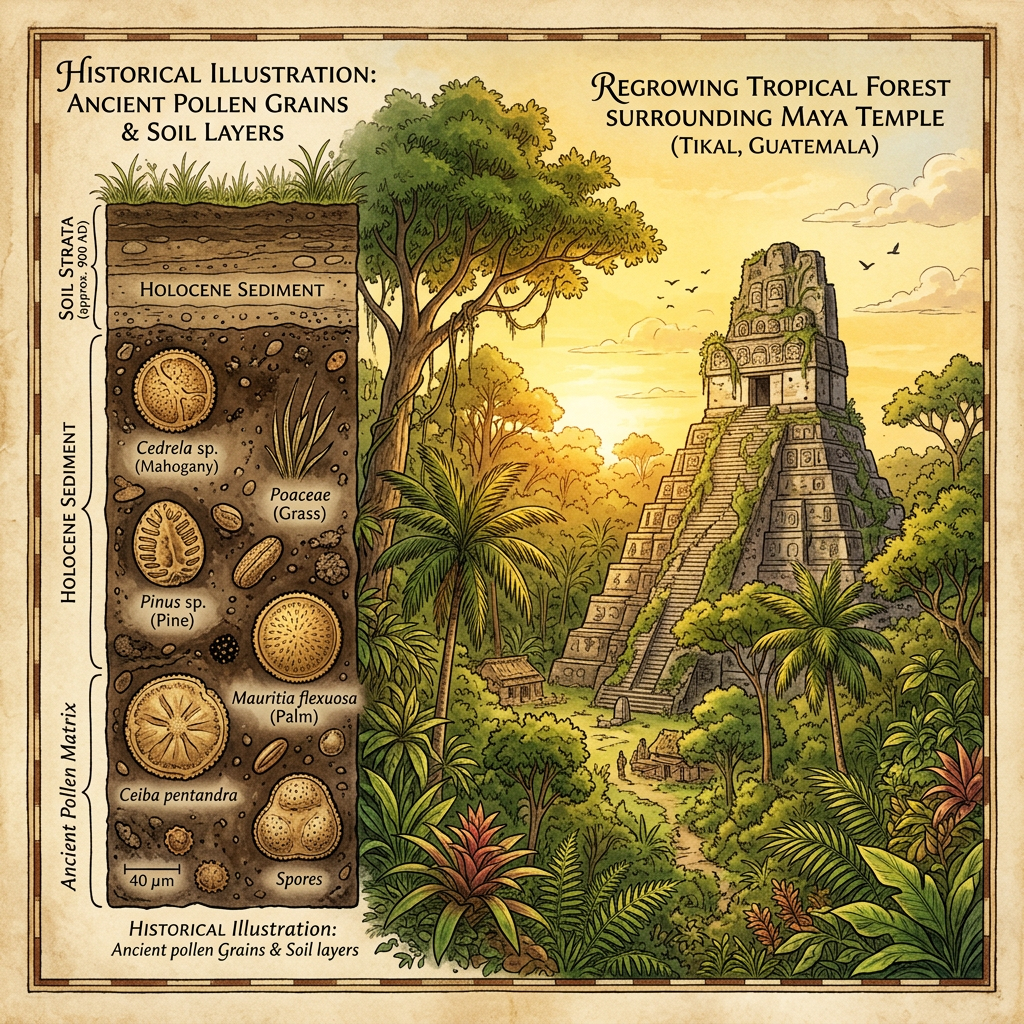
A groundbreaking paleobotanical study published in Environmental Archaeology Quarterly has identified a period of massive ‘Great Reforestation’ in the Maya Lowlands following the collapse of the Classic Maya period. By analyzing pollen signatures and carbon isotopes from deep lake-bed sediment cores, researchers found that forest cover recovered at an unprecedented rate between 950 and 1100 CE.
The findings suggest that the departure of dense urban populations allowed for a rapid sequestration of carbon, potentially triggering a localized cooling effect. This environmental history breakthrough provides crucial data on how tropical ecosystems recover from intensive human land use and offers a unique perspective on the long-term climatic impacts of ancient societal shifts.