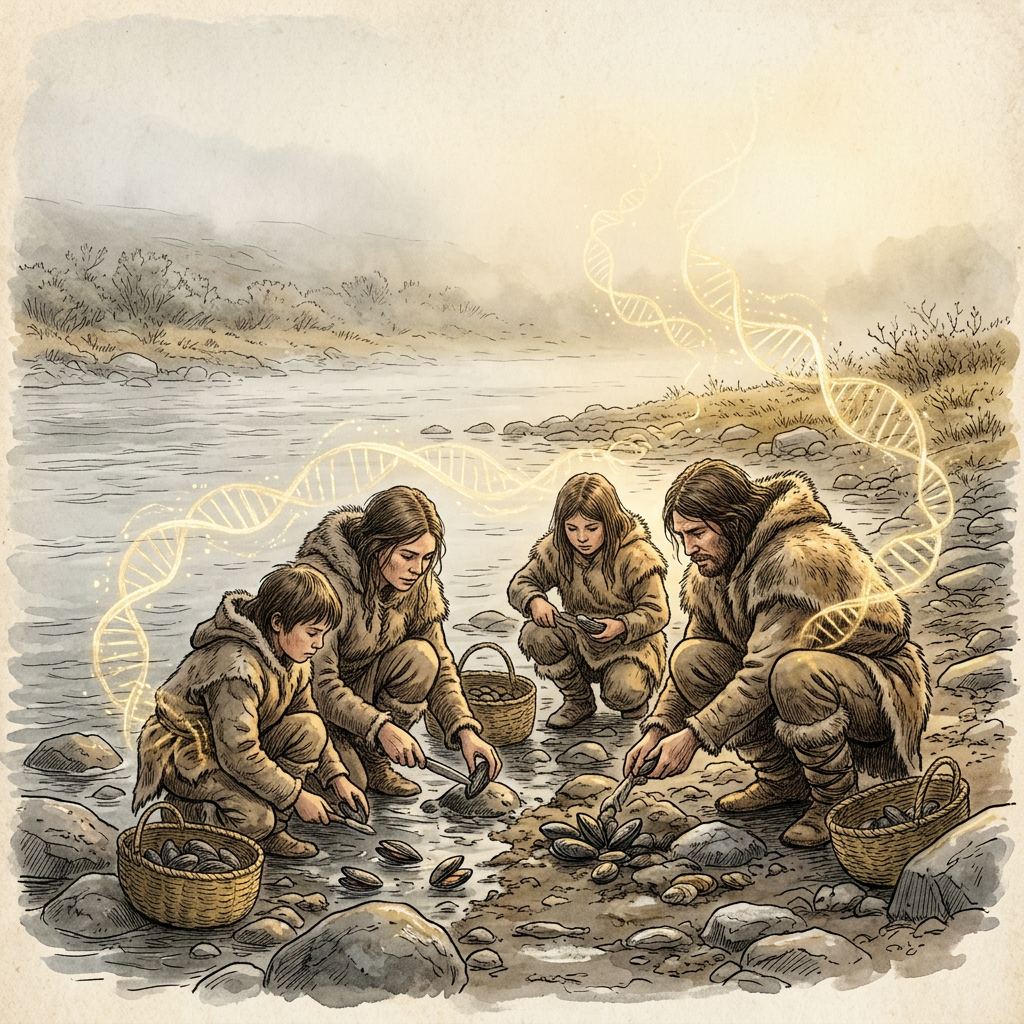
A paleogenomic study published in Cell Reports has analyzed the remains of individuals found in the submerged Solent River valley of the English Channel. The data reveals a unique Pleistocene lineage that split from other European hunter-gatherers nearly 18,000 years ago, showing specialized genetic markers for high-iodine metabolism.
This adaptation suggests that these populations were highly specialized estuarine foragers, relying almost exclusively on seaweed and tidal mollusks long before the arrival of agriculture. The research highlights the incredible evolutionary flexibility of early human groups in colonizing the rapidly changing landscapes of the post-glacial world, prior to the permanent flooding of Doggerland.