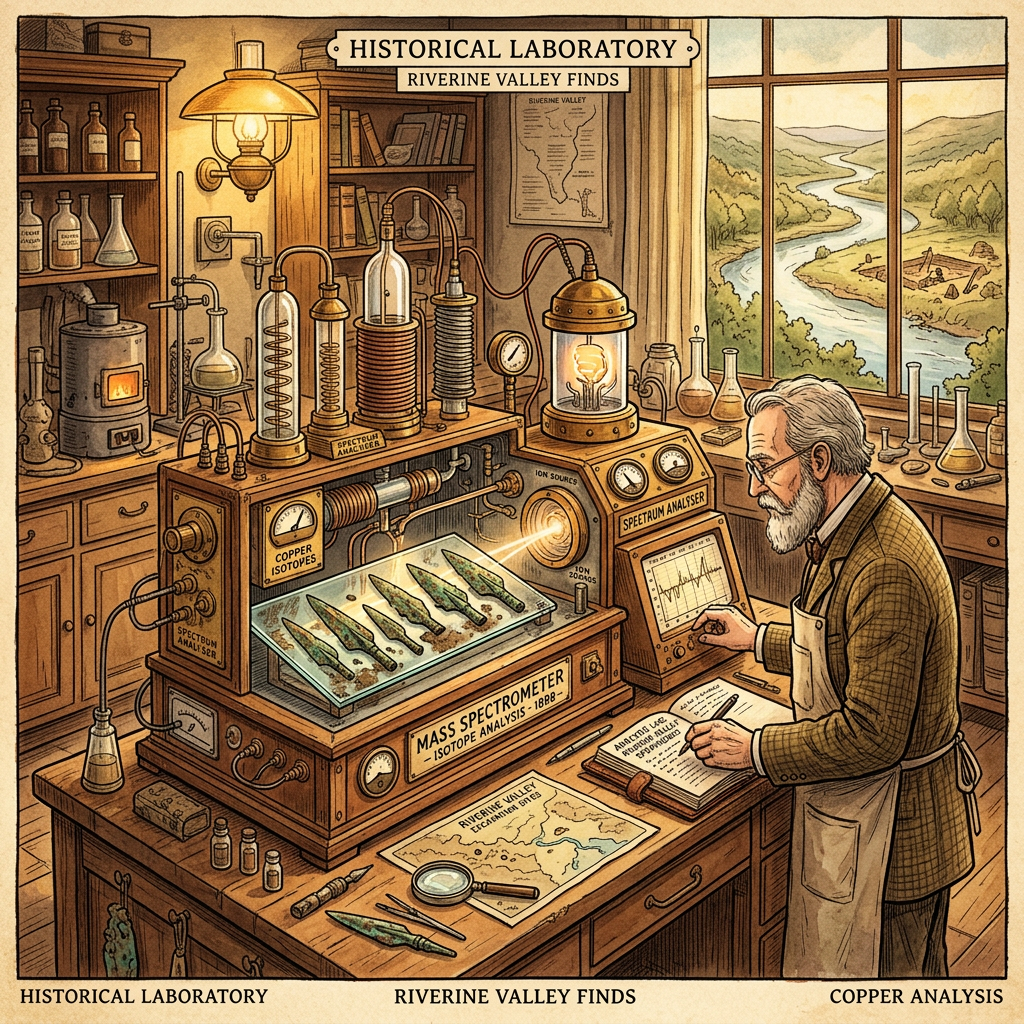
Archaeologists at Antiquity Academic Press have announced a breakthrough in dating early metallurgical sites in the Belan Valley of North India. Using a novel Zircon-Lutetium isotopic refinement technique, researchers have pushed back the chronology of the iconic 'Copper Hoard' transitions to 3600 BCE, nearly 600 years earlier than previous estimates.
This methodology allows for much higher precision in identifying the temporal gap between the late Neolithic and the early Chalcolithic periods. The refined dates suggest that copper smelting and the production of specialized artifacts were established well before the urban maturity of the Indus Civilization, indicating a localized and independent evolution of metalworking technologies in the Gangetic fringes.