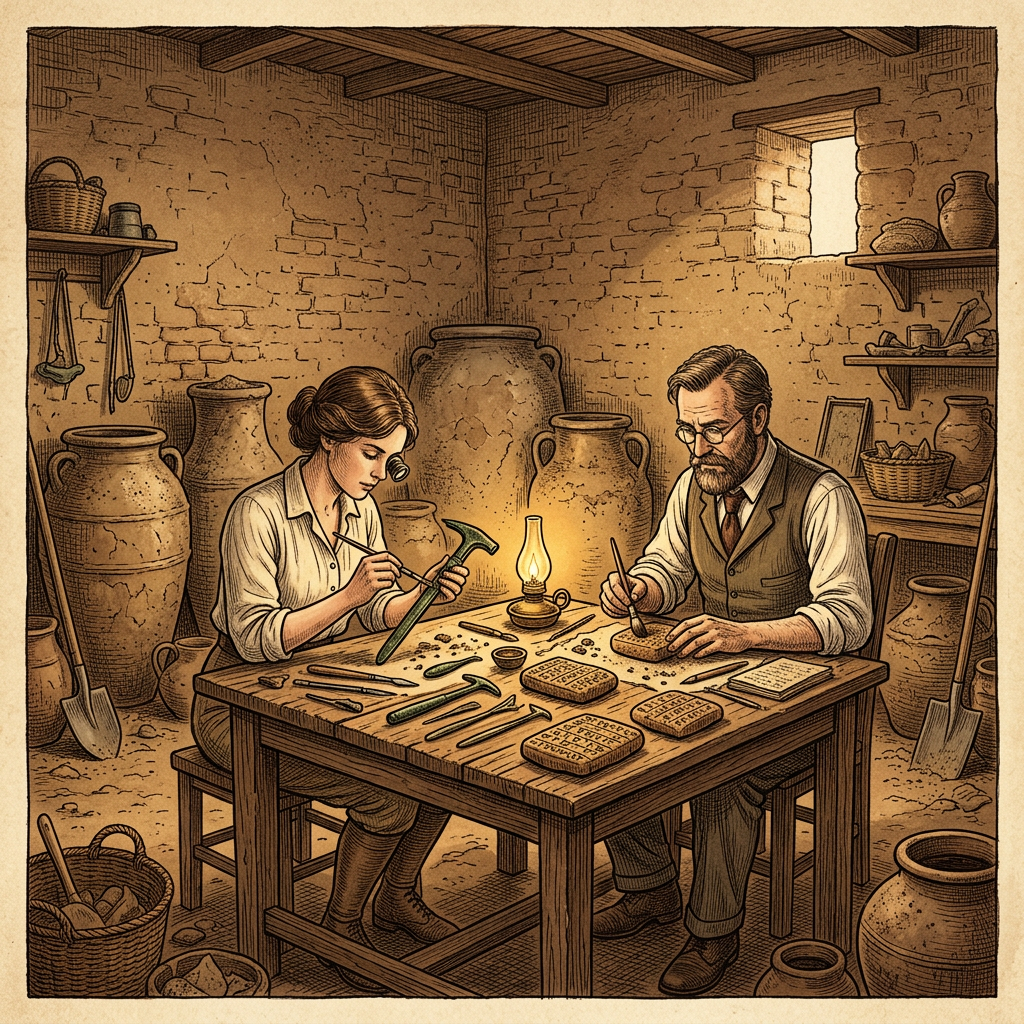
A team of international researchers at the site of Ancient Ur has unearthed a specialized administrative wing dedicated to the 'Master of the Royal Scribes’ Parchment-Supply.' The excavation revealed a library of cuneiform tablets that serve as industrial manuals for the preparation of high-grade leather and early parchment. These records detail the specific vegetable tannins and mineral salts used to create durable writing surfaces, a rare find that shifts the focus from the text itself to the material science of Sumerian bureaucracy.
In addition to the manuals, archaeologists discovered several intact bronze scraping tools and mineral-alkali vats still containing traces of specialized hide-curing agents. The archive suggests that the royal court at Ur maintained a strictly regulated monopoly on writing materials to ensure the longevity of imperial records. This discovery highlights the interconnectedness of craft and administration in Mesopotamia, revealing how industrial-scale leather-working was fundamental to the expansion of the world's first writing systems.