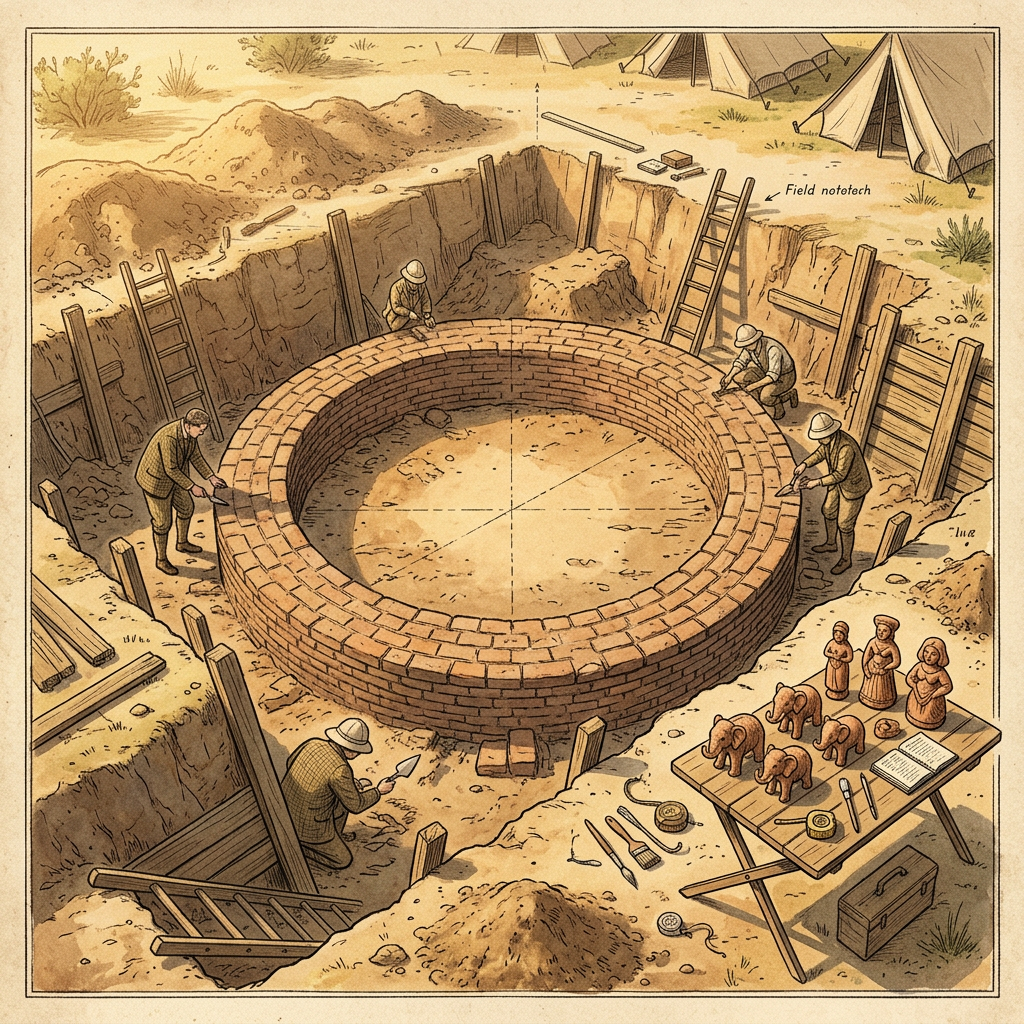
Excavations led by the University of Allahabad have uncovered the foundations of a 3rd-century BCE brick temple in the outskirts of Prayagraj. The site, which dates to the Mauryan Empire, contains several terracotta plaques depicting an early form of Gajalakshmi (the goddess Lakshmi flanked by elephants). This discovery is one of the oldest structural evidences of organized Hindu temple architecture in the Indo-Gangetic plain, predating the more common stone temples of the later Gupta period.
The foundation is built using large-sized burnt bricks and features a circular sanctum, a hallmark of early Mauryan ritual spaces. Archaeologists also recovered a collection of silver punch-marked coins and polished pottery fragments, suggesting the temple was a center of significant economic and religious activity during the reign of Ashoka. The discovery provides a vital missing link in the evolution of Indian sacred architecture from timber to permanent masonry.