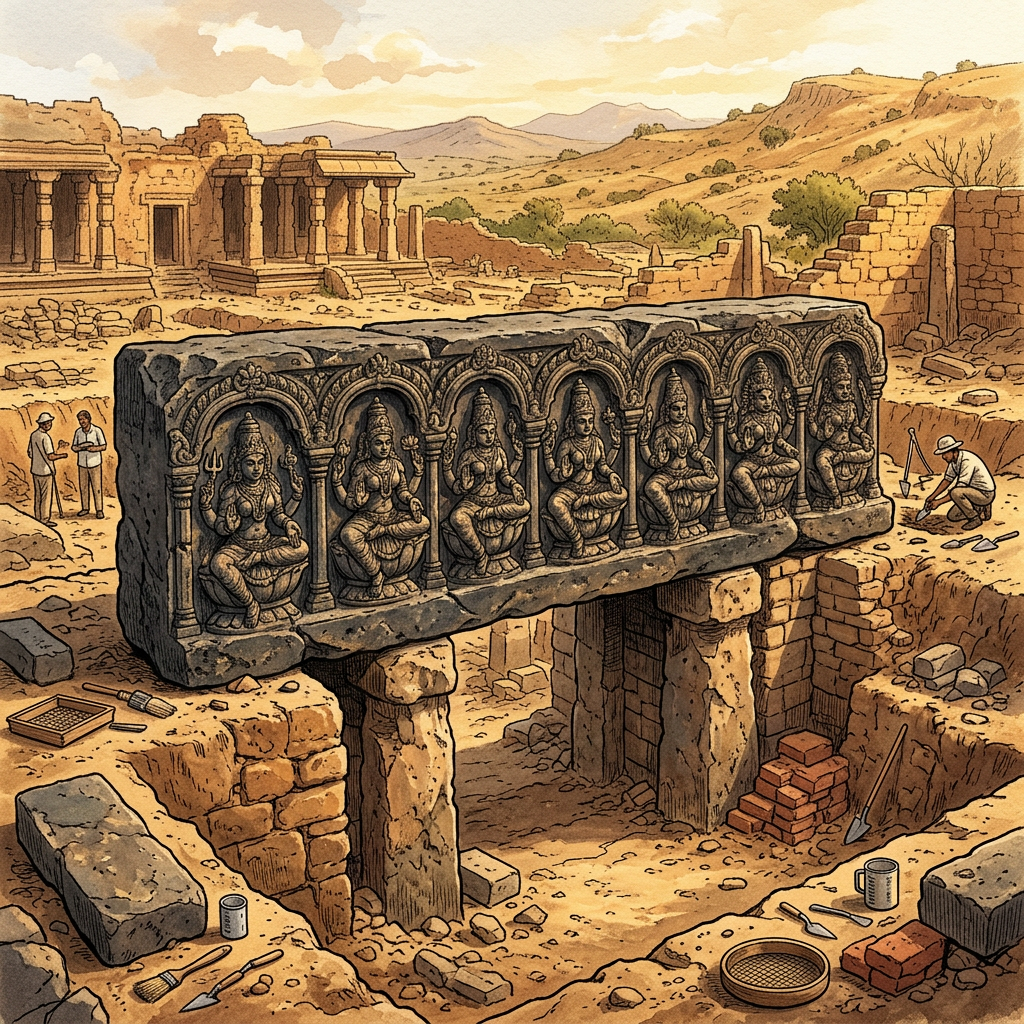
Archaeologists working in the Marathwada region have unearthed the significant remains of an 11th-century temple attributed to the Later-Seuna (Yadava) dynasty. Located in a remote sector of the Beed district, the site features a remarkably well-preserved stone lintel depicting the Ashta-Matrika (eight mother goddesses), a rare iconographic find for this specific architectural period. Preliminary excavations suggest the temple was part of a larger religious complex that served as a major stop for medieval pilgrims traveling toward the Western Ghats.
The structural layout follows a classic Bhumija style, though the foundation utilizes a unique interlocking basalt stone technique designed to resist seismic activity. Scholars believe the temple was dedicated to a syncretic form of Shiva and Shakti, as evidenced by the presence of both Shaivite symbols and feminine divine friezes. The Archaeological Survey of India (ASI) has already begun the process of cataloging the site to prevent further encroachment and to plan for a full-scale excavation of the surrounding mounds.