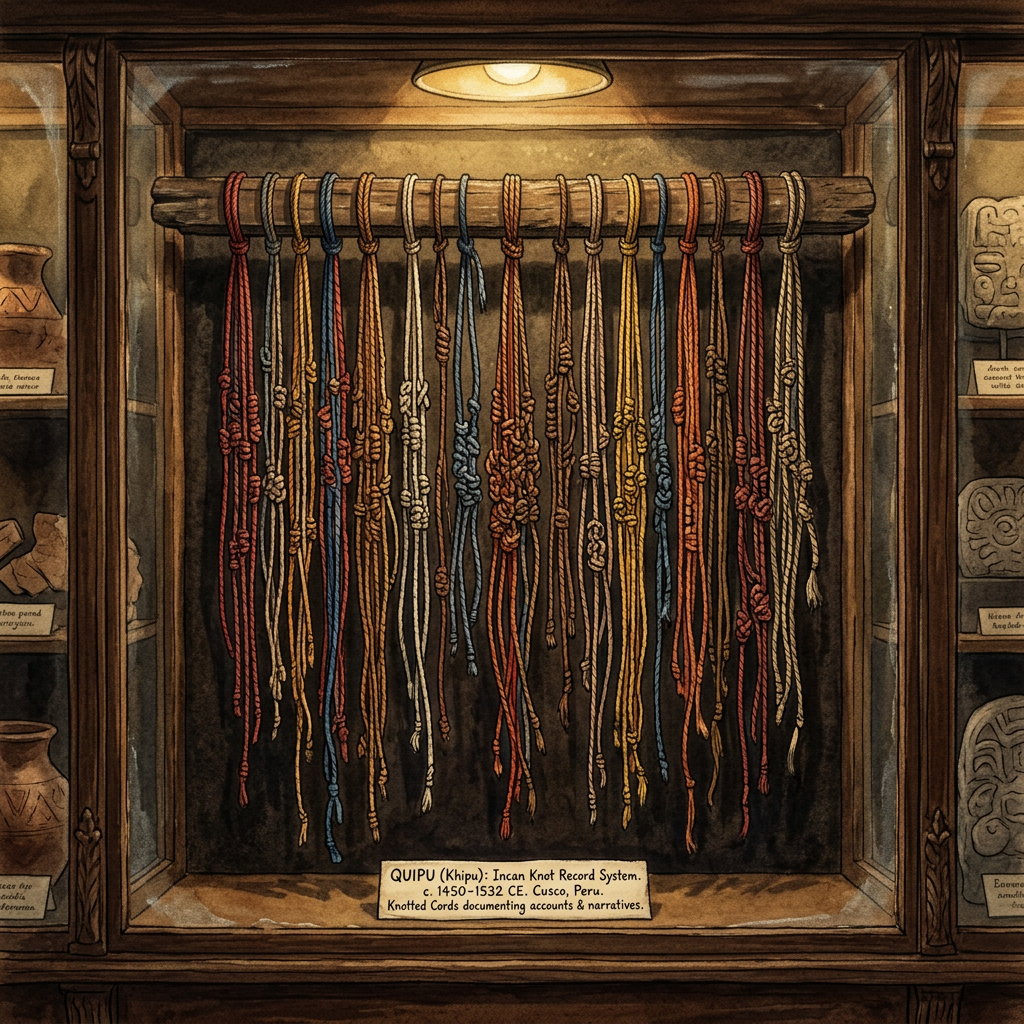
Heritage researchers in Peru have made a breakthrough in translating the numerical and tactile codes of Quipu—the knotted strings used by the Inca and their predecessors. New analysis reveals that these devices were used to record more than just accounting; they stored 'ethical ledgers' based on the principle of Ayni, or radical reciprocity. This philosophy posited that all interactions—between humans, nature, and the divine—must be perfectly balanced through mutual aid.
The discovery suggests that the Andean civilizations possessed a complex, non-written philosophical tradition focused on the sustainability of social bonds. By documenting every act of service and resource sharing, the Quipu served as a physical manifestation of a community-wide ethical contract that governed every aspect of life in the Andes for centuries.