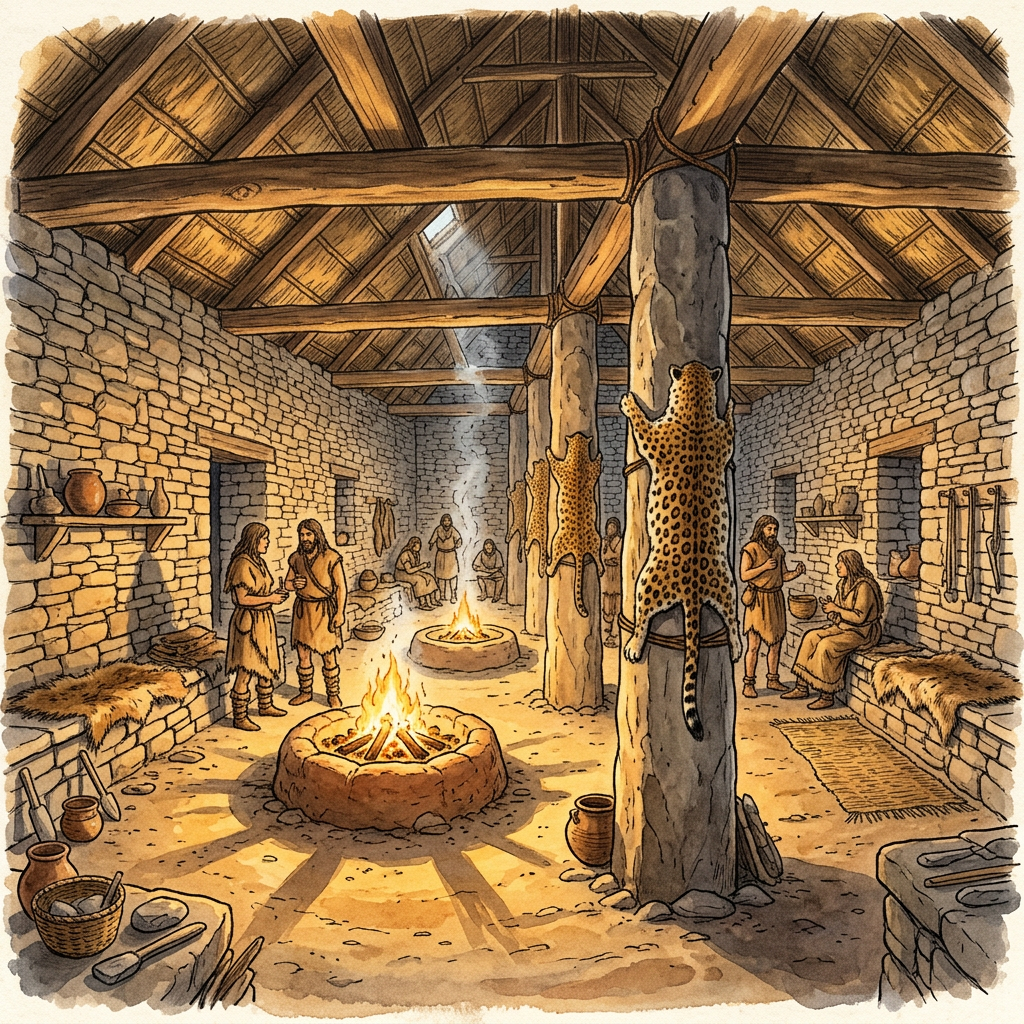
Researchers at a Chalcolithic site in Central Anatolia have discovered a monumental communal structure containing carbonized remains of leopard skins and specialized flint skinning tools. The presence of large-scale hearths and communal serving vessels suggests the hall was used for a recurring seasonal festival celebrating the relationship between the community and the local apex predators.
Archaeological evidence indicates that these gatherings involved the ritual consumption of wild game followed by the symbolic "wearing" of leopard skins, a practice that likely served to strengthen tribal identity. This find provides a rare glimpse into the predatory-themed cultural heritage of early agricultural societies, predating more formalized urban religions in the region.