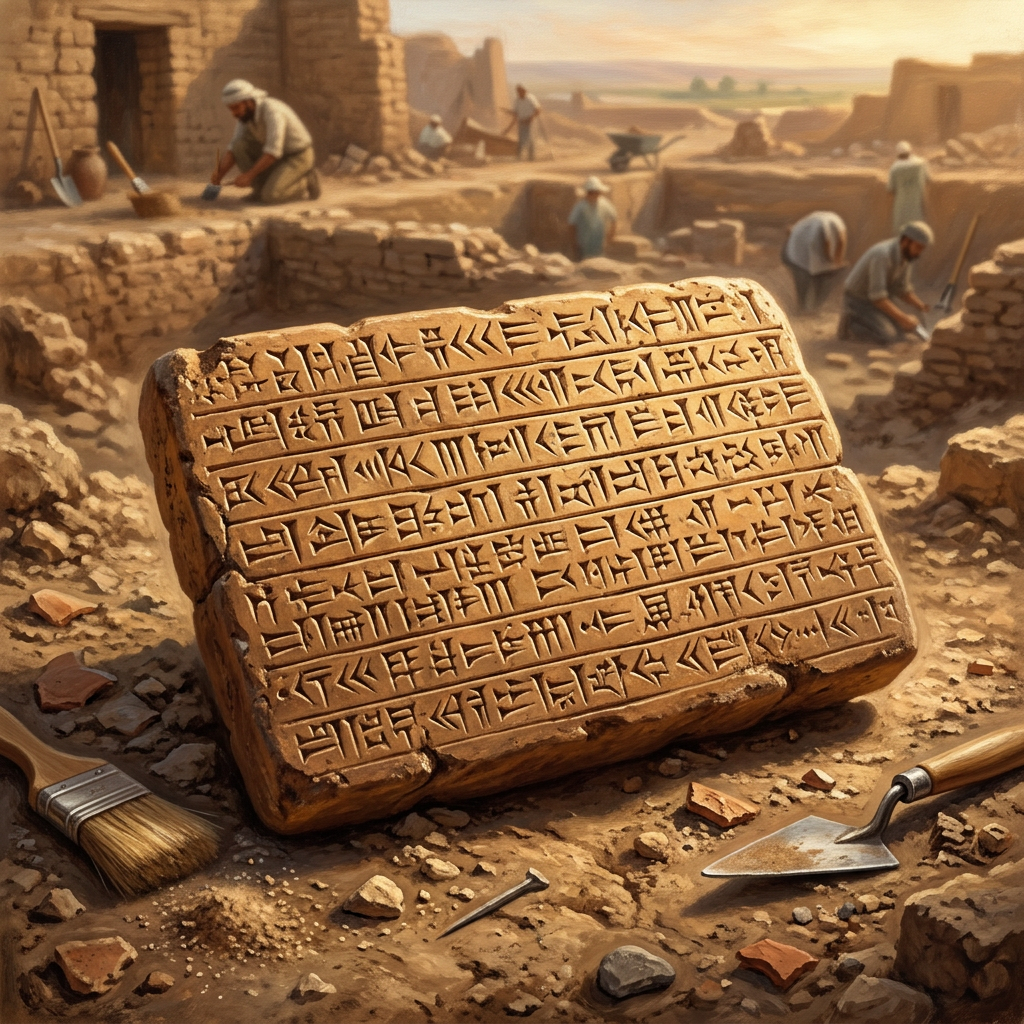
Archaeologists excavating the residential quarters of the ancient Sumerian city of Umma have identified a specialized administrative archive belonging to the Registry of Royal Scribes for the Resin-Import. This unprecedented find includes over 200 cuneiform tablets dating to the Third Dynasty of Ur, detailing the rigorous quality-control measures applied to imported bitumen and tree resins used for shipbuilding and architectural waterproofing.
The ledger entries reveal a sophisticated grading system for raw bitumen sourced from the Zagros Mountains, documenting the chemical purity and viscosity levels required for different maritime applications. This discovery provides the first direct evidence of a centralized Sumerian bureau dedicated to the industrial standardization of adhesives, suggesting that the success of Mesopotamian river trade was underpinned by a state-managed material science department.