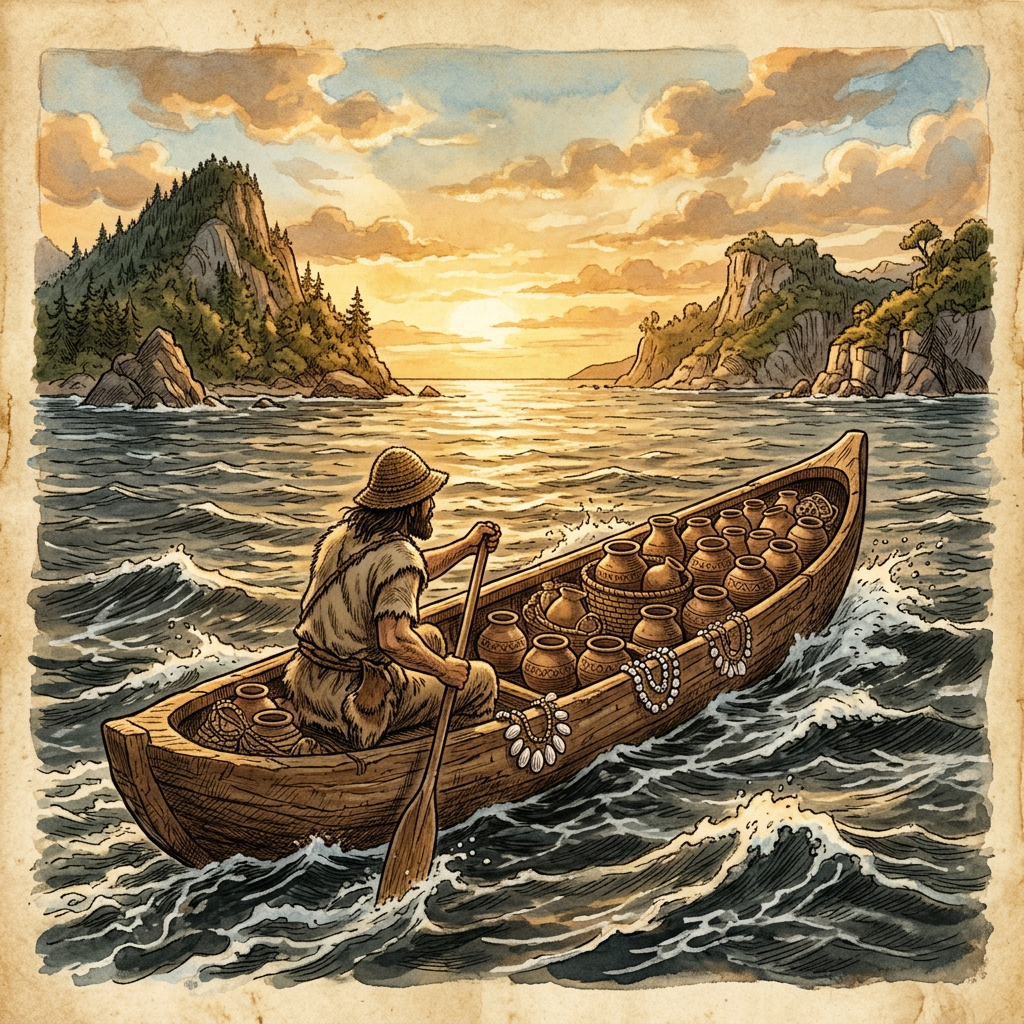
A groundbreaking study published in the journal Nature has uncovered a sophisticated maritime trade network linking the Jomon period of Japan with the Jeulmun culture of the southern Korean Peninsula. By utilizing high-resolution chemical fingerprinting on red-pigmented ornaments, researchers identified that high-quality cinnabar (vermilion) from the Niu mines in Japan was traded for nacre (mother-of-pearl) and specialized shell-harvesting tools from Korean coastal settlements as early as 2,000 BCE.
The discovery of this 'Vermilion and Nacre' route challenges long-held assumptions about the isolation of Neolithic island communities. The data suggests that prehistoric navigators used advanced dugout canoes to traverse the Tsushima Strait, braving dangerous currents to exchange luxury materials used in burial rites and social displays. This network suggests a shared symbolic language regarding the color red and maritime status symbols that spanned the East China Sea for centuries before the rise of formal state structures.