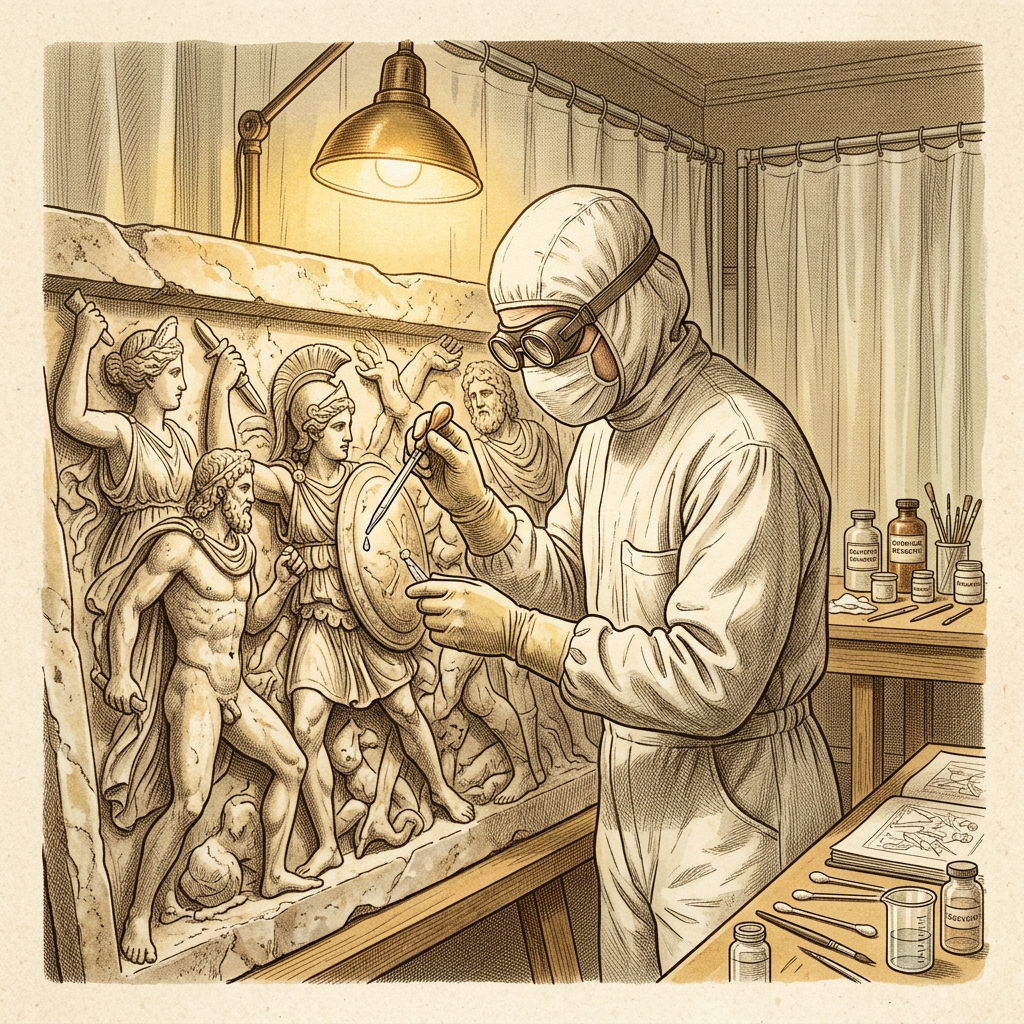
The Pergamon Museum in Berlin has begun the application of a revolutionary protective coating to the Great Altar of Pergamon to halt the accelerating decay caused by urban air pollution. The new 'Graphene-Enzymatic' nanofilm is an ultra-thin, transparent layer that combines the durability of graphene with bio-active enzymes capable of neutralizing sulfur dioxide and nitrogen oxides before they can penetrate the porous marble surface.
This pilot project is the first of its kind to be used on a large-scale Hellenistic monument. The coating is designed to be completely reversible and non-reactive with the original stone, solving a long-standing dilemma for conservators who have struggled to protect the friezes without altering their visual appearance. If successful, the technology will be shared through a UNESCO-led initiative to protect other major marble sites, such as the Acropolis and the Roman Forum, which are facing similar environmental threats from worsening city smog.