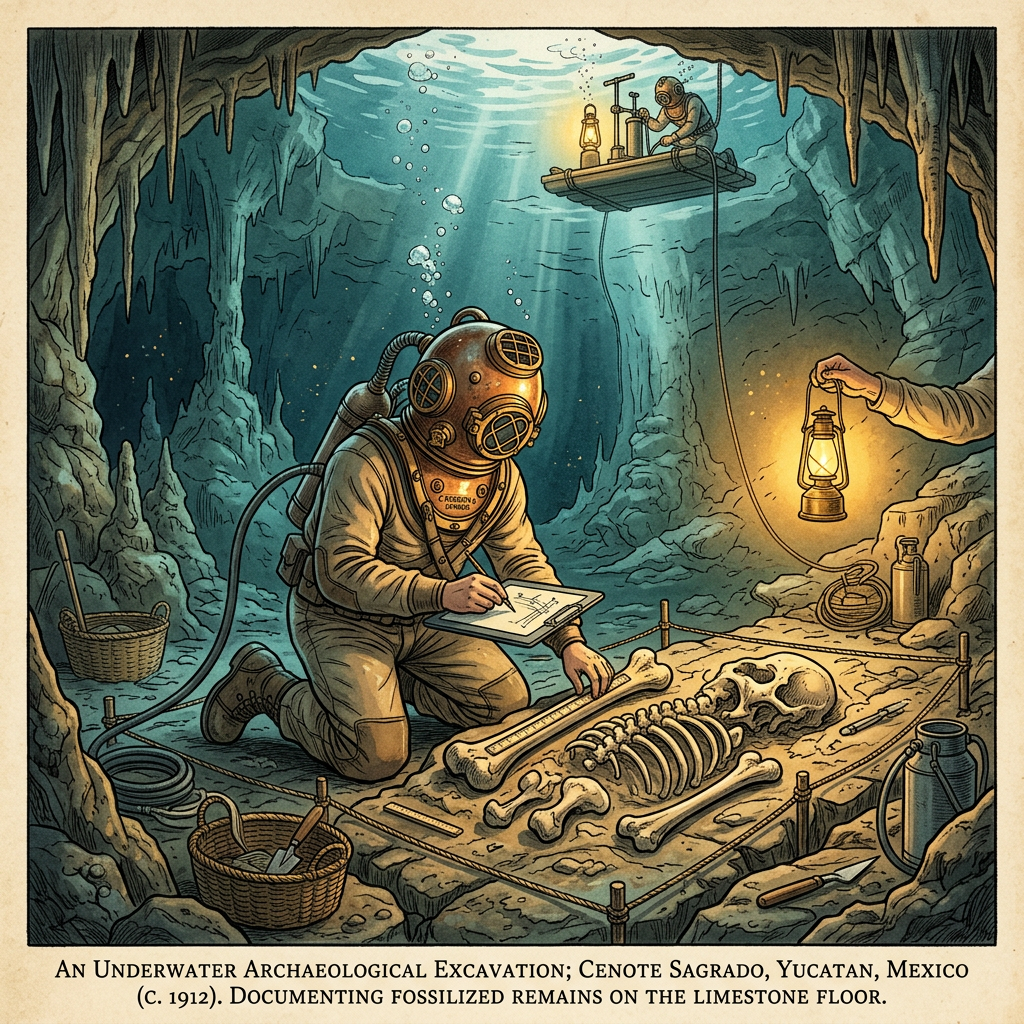
New paleogenomic research conducted by an international team of geneticists has identified a unique evolutionary signature in the remains of a Late Pleistocene individual found in the submerged caves of the Yucatán Peninsula. The study, appearing in Nature Genetics, highlights the first known instance of a genetic adaptation to high-nitrogen groundwater, a result of the unique cenote-based ecosystem of the region. This adaptation allowed early inhabitants to safely consume water from karst aquifers that would typically be toxic to other human populations.
The analysis suggests that this lineage remained isolated for several millennia, developing specialized metabolic pathways to process nitrates and nitrites. These findings challenge the notion of a single, uniform migration pulse into the Americas, instead pointing to a diverse mosaic of specialized hunter-gatherer groups who adapted rapidly to extreme local environmental niches long before the advent of agriculture in the region.