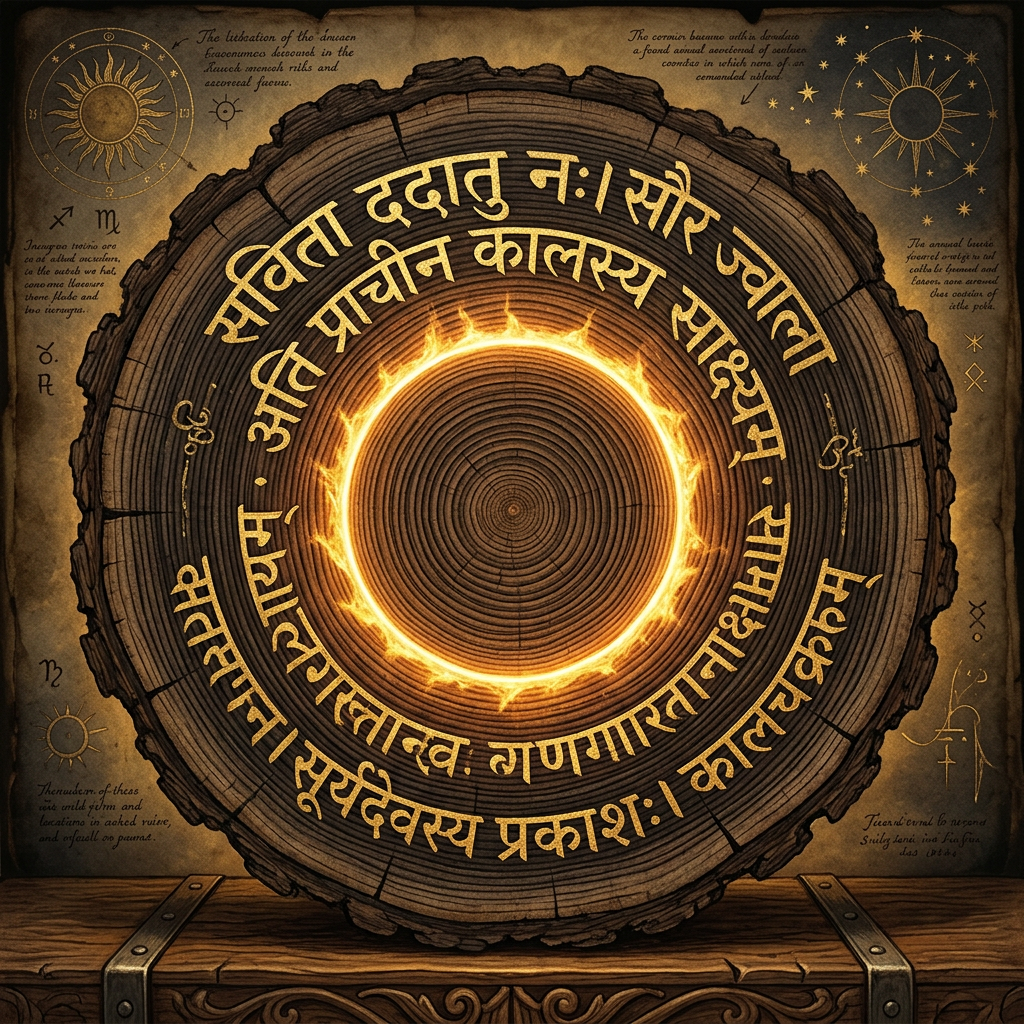
Scientists specializing in dendrochronology and archaeoastronomy have identified a significant correlation between specific celestial descriptions in the Rigveda and a massive solar super-flare event that occurred circa 3450 BCE. This event, detected via anomalous Carbon-14 spikes in fossilized Himalayan Pindrow Firs, matches descriptions in ancient hymns of a "tri-fold expansion of the solar disc" and prolonged atmospheric luminosity. The study suggests that these oral traditions contain high-fidelity observations of extreme solar activity that occurred at the very dawn of the Bronze Age.
By synchronizing the solar cycle data from tree rings with the astronomical positioning of the stars mentioned in the hymns, researchers have been able to refine the dating of these specific literary layers with unprecedented precision. This multidisciplinary approach confirms that Vedic astronomical observations were grounded in real-world physical events, providing a robust scientific framework for interpreting the antiquity of the Indo-Aryan observational tradition.