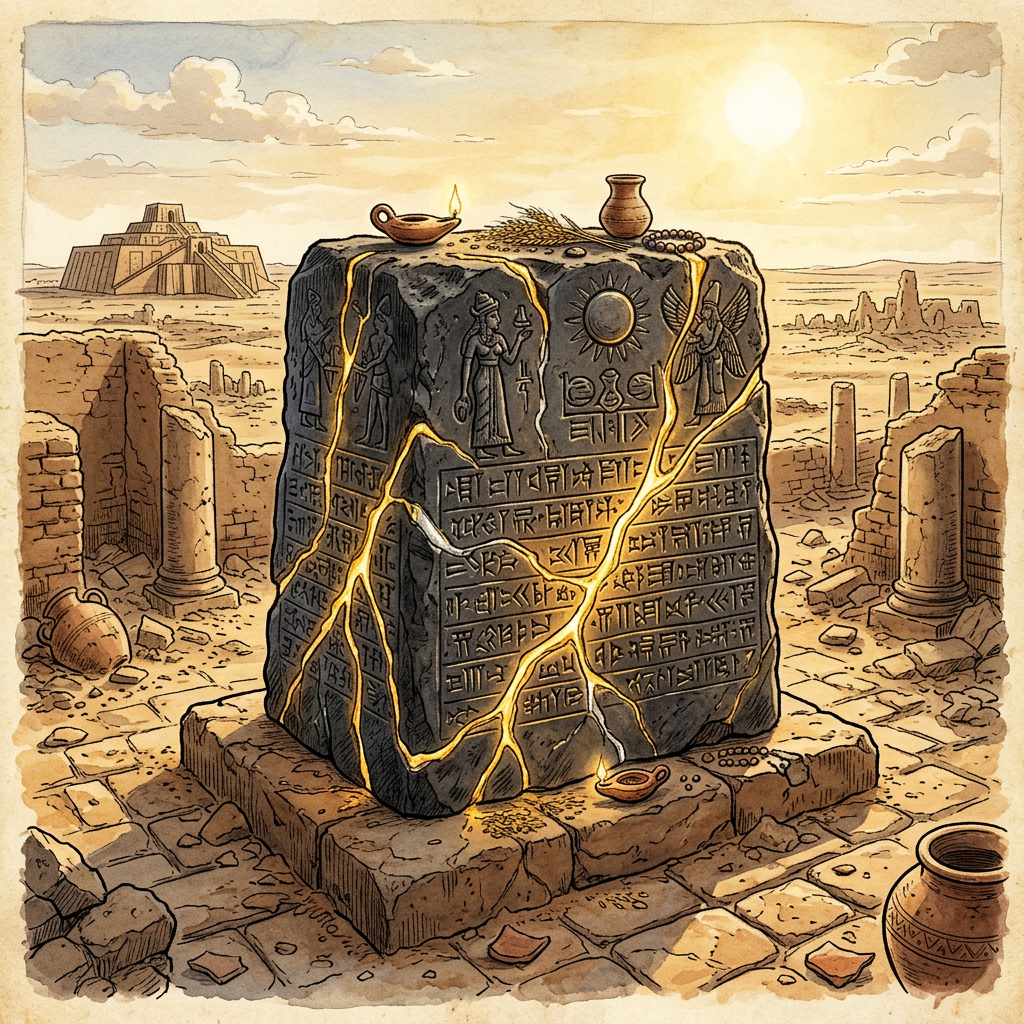
Archaeologists working in the ancient city-state of Girsu have unearthed a series of monumental basalt altars featuring intricate electrum veining. These structures, dating back to the late third millennium BCE, were located at the terminus of a previously unknown processional way. Analysis of the surrounding strata reveals significant deposits of charred grain and animal remains, suggesting these altars were the focal point of the 'Festival of the Star-Ascension', an annual event dedicated to the rising of the constellation Enzu.
The excavation team from the British Museum and the Iraqi State Board of Antiquities noted that the electrum used in the veins was imported from the Anatolian highlands, highlighting the economic and ritual importance of the site. The alignment of the altars corresponds precisely with the heliacal rising of specific stars, providing new evidence of how Sumerian astronomical knowledge dictated the timing of major urban festivals and communal feasting.