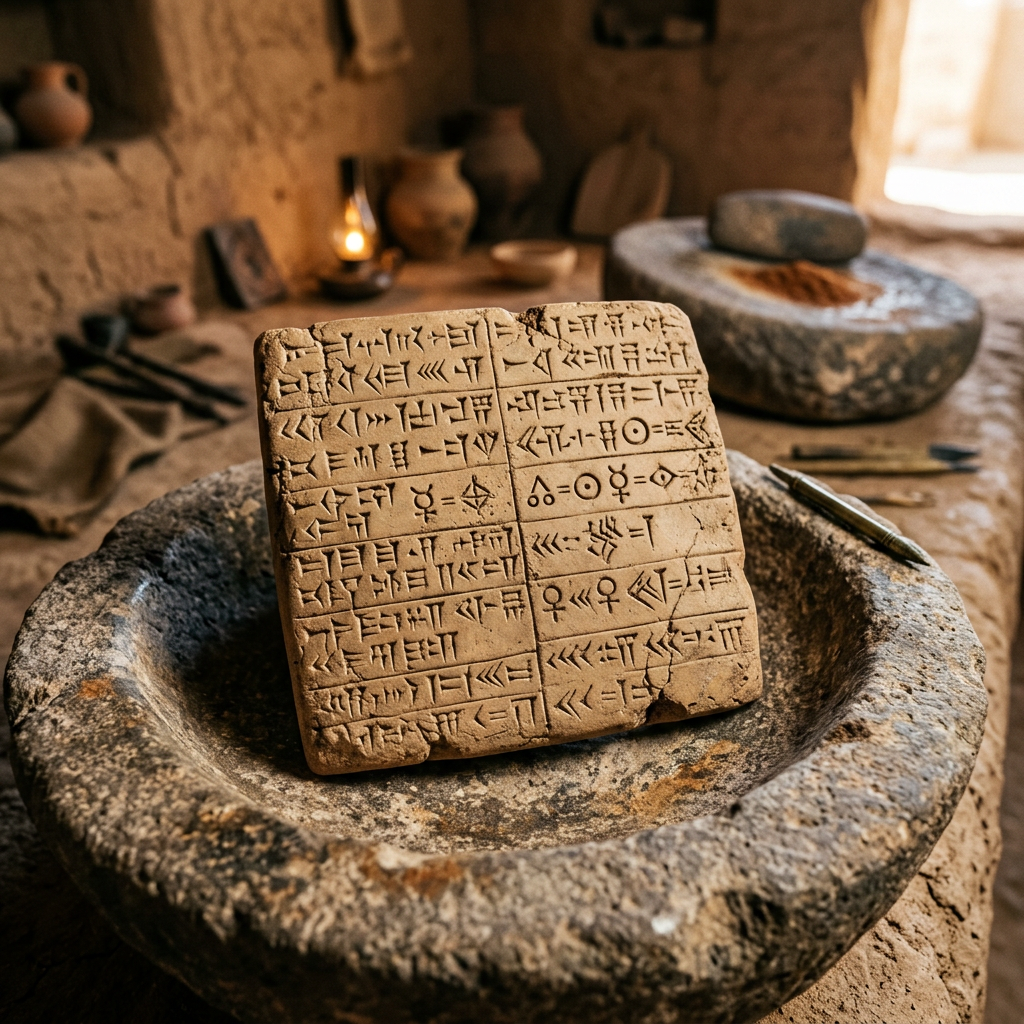
Archaeologists working in the residential sector of ancient Ur have discovered a specialized cuneiform archive belonging to the royal overseers of the resin-oil monopoly. The tablets detail the chemical grading and purification standards for aromatic oils imported from the Persian Gulf and the Indus Valley during the Third Dynasty of Ur.
The find includes a large-scale industrial wing with circular stone crushing vats and traces of distilled cedar and myrrh. These ledgers represent the earliest known government-regulated quality control system for pharmaceutical and ritual oils, highlighting the administrative complexity of Sumerian trade guilds and their international reach.