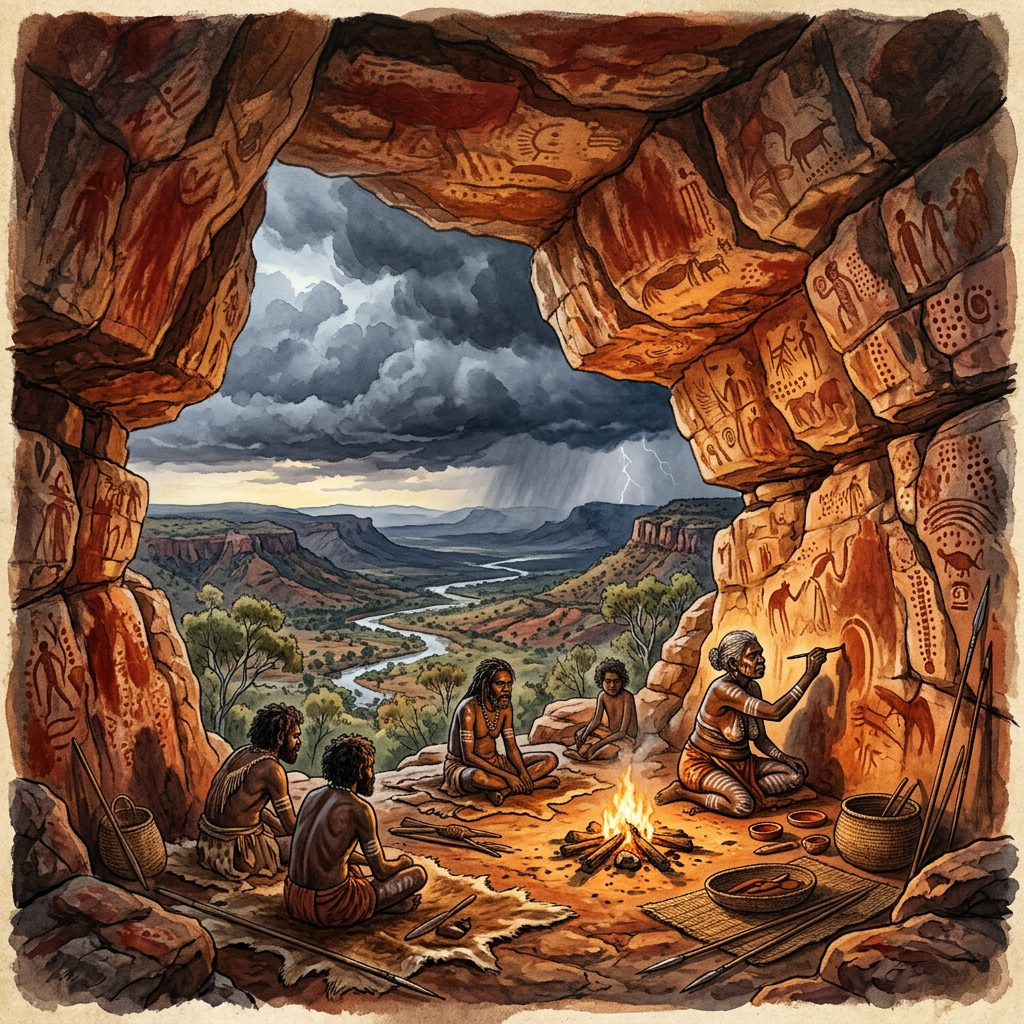
In the remote Kimberley region of Western Australia, a series of sonorous stones stained with deep red hematite have been identified as part of a massive open-air ritual site. These 'lithophones' produce distinct musical tones when struck and were strategically placed to amplify sound across a natural amphitheater during the onset of the rainy season.
Archaeologists believe these instruments were central to a 15,000-year-old monsoon-greeting festival, where communal music was used to summon the life-giving rains. This finding pushes back the known timeline for organized seasonal gatherings in Australia and underscores the deep connection between indigenous heritage and ecological cycles.