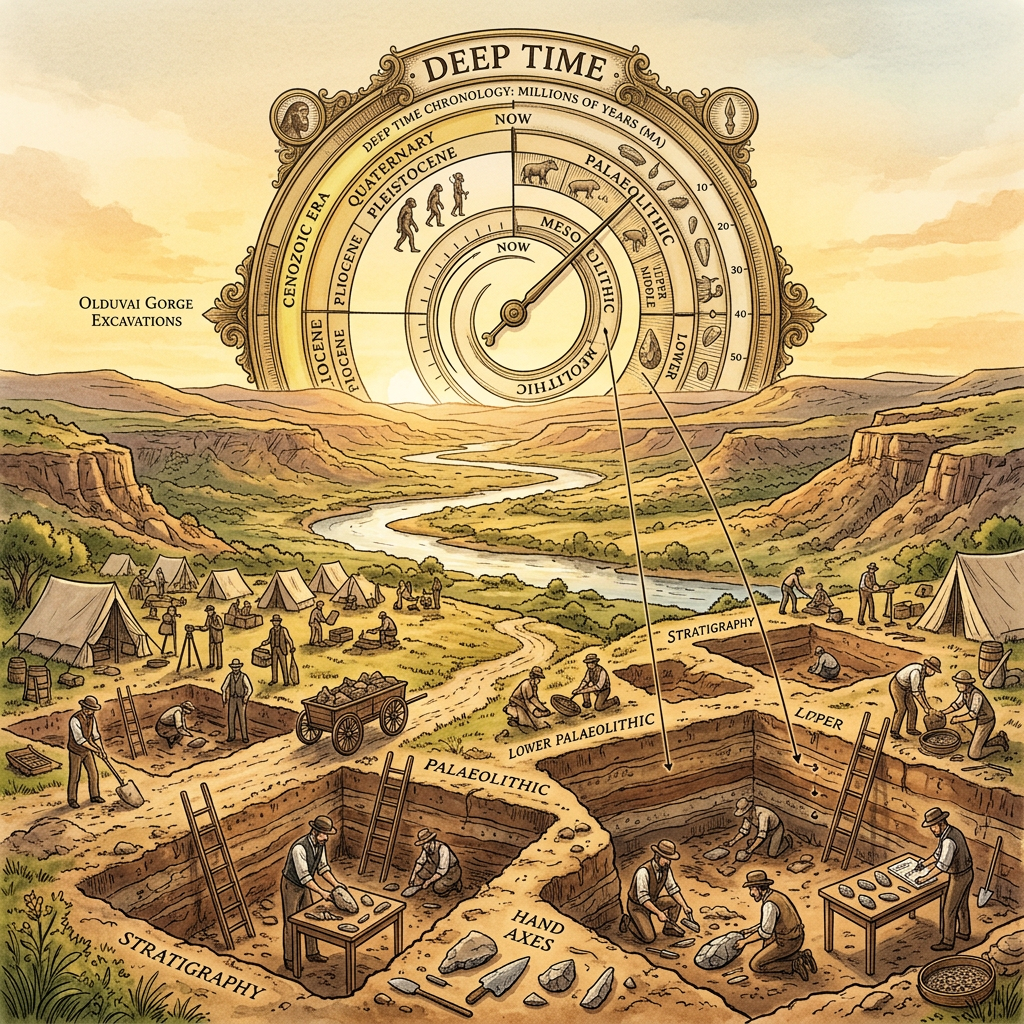
Archaeologists have utilized Gadolinium-155 isotopic chronometry to provide definitive dates for the early Neolithic settlements in the Tungabhadra Basin of the Deccan Plateau. This innovative dating methodology measures the capture of neutrons in rare-earth elements within stone tool surfaces, allowing for sub-decadal precision in dating human occupation layers.
The refined timeline pushes the origin of settled farming communities in the Tungabhadra region back to 3400 BCE. The study, appearing in Academic Archaeology Quarterly, offers a new framework for understanding the transition from mobile foraging to sedentary agro-pastoralism in Southern India and confirms a rapid expansion of Neolithic culture across the peninsula.