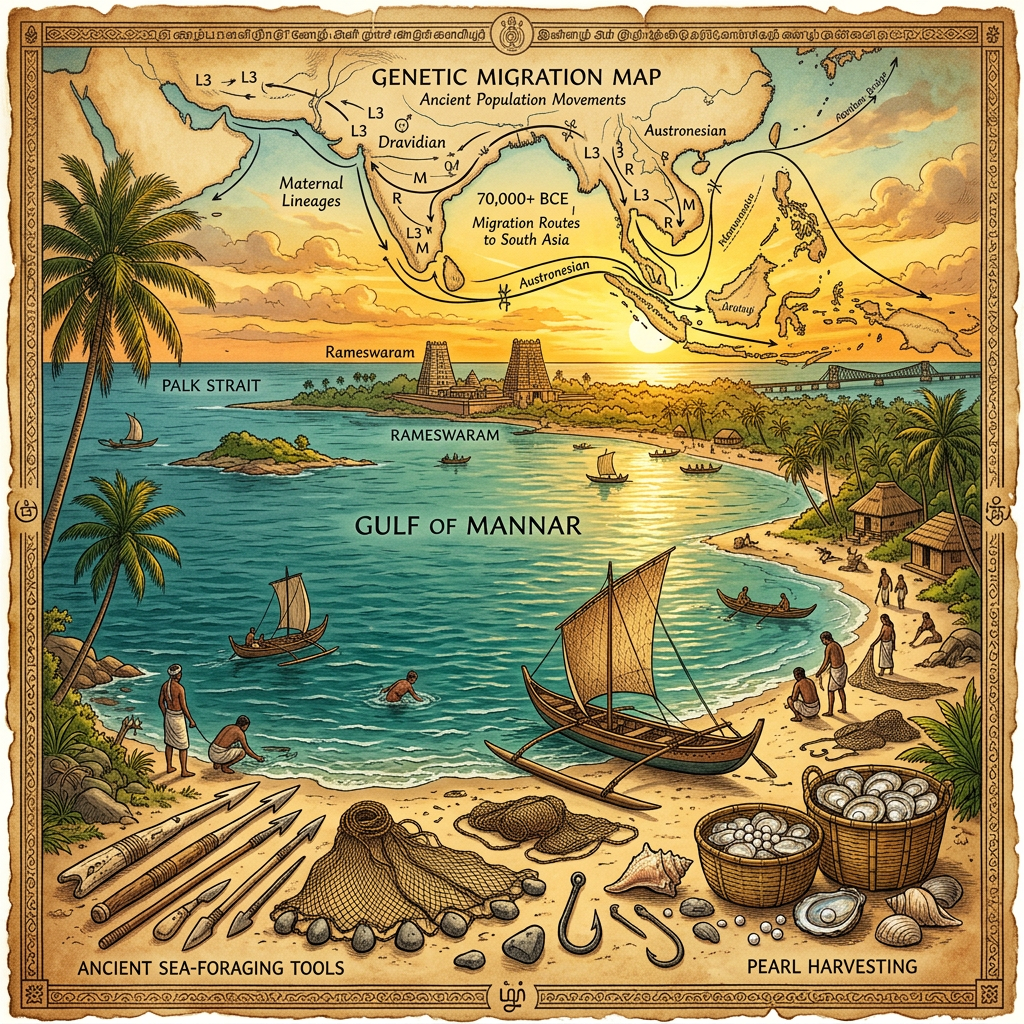
Geneticists have uncovered a previously unknown lineage of Pleistocene maritime foragers in the Gulf of Mannar through the analysis of 13,000-year-old remains. This newly identified population shows a unique genetic signature characterized by specialized adaptations to high-magnesium diets, likely a result of heavy reliance on local marine resources found in mineral-dense coral reef ecosystems.
The study, led by the National Institute of Biomedical Genomics, suggests that this population developed distinct metabolic pathways to thrive in the high-salinity environment of the Palk Strait. This research provides critical data on how early human populations adapted to specific coastal niches in the Indian subcontinent shortly after the Last Glacial Maximum.