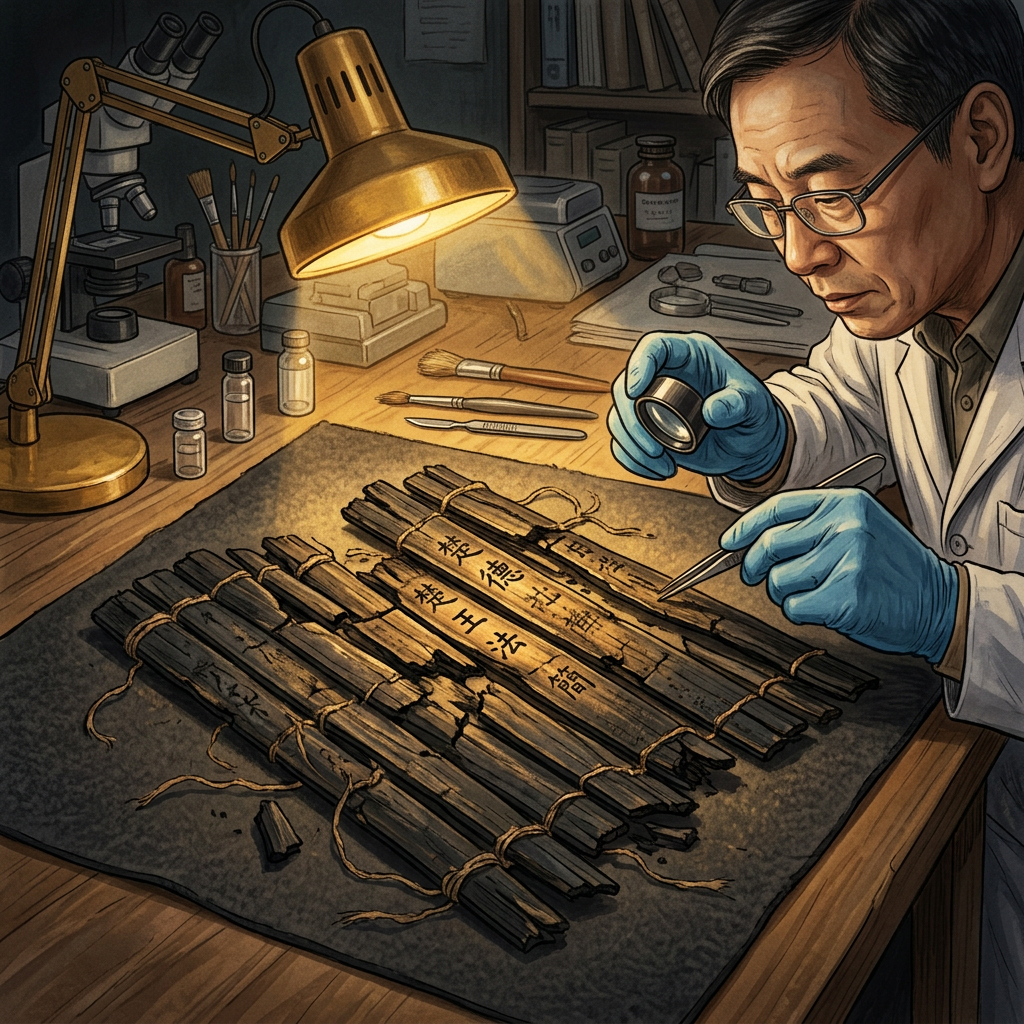
In the Zhouyuan site of Shaanxi Province, archaeologists have discovered the remains of an imperial scriptorium dating to the Western Zhou Dynasty. The structure served as a production and storage hub for bamboo slips, the primary medium for writing before the invention of paper. This find is critical for understanding the early development of Chinese administrative record-keeping.
Advanced multispectral imaging has allowed researchers to read portions of the charred slips, which include hitherto unknown ritual protocols and bureaucratic logs for the distribution of jade and silk. This discovery provides a rare glimpse into the early literate culture of ancient China and the formalization of the Zhou state's complex legal and religious frameworks.