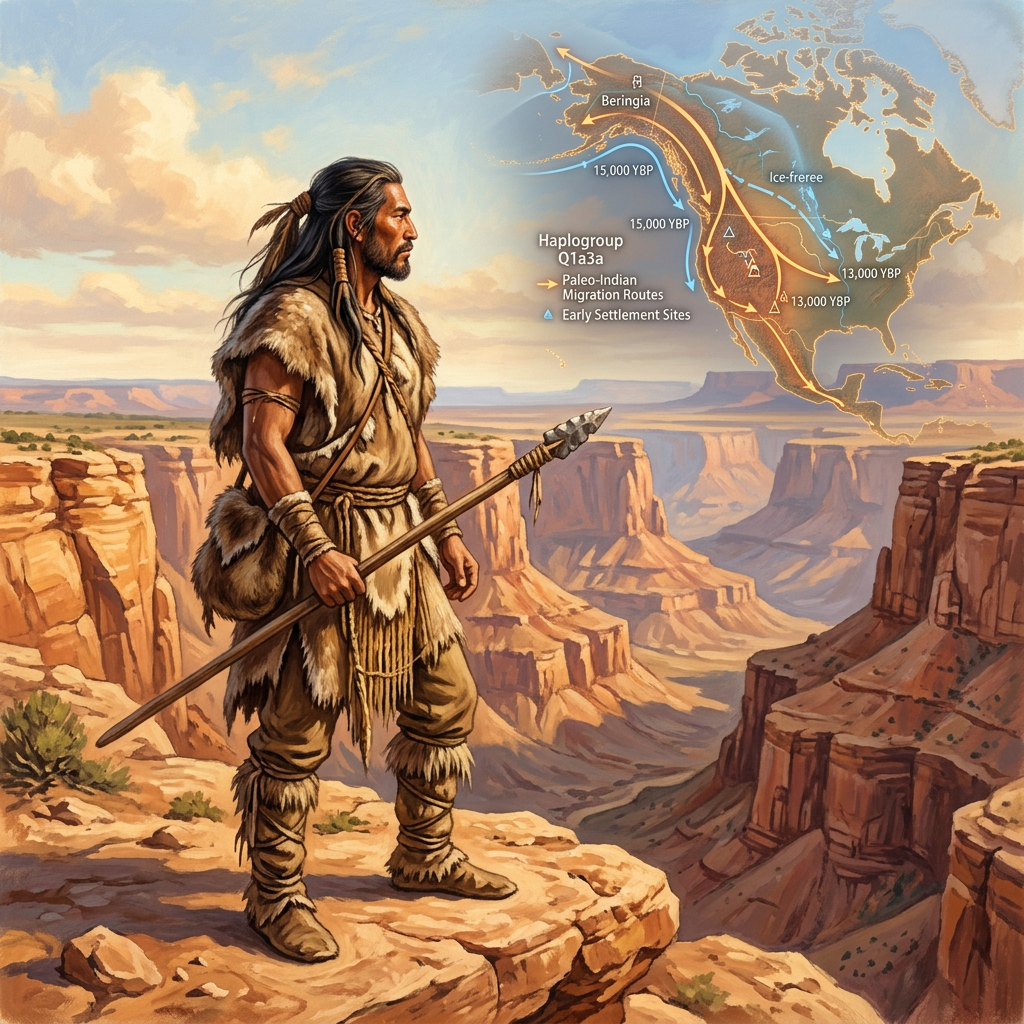
An international team of geneticists has published a comprehensive analysis of 10,000-year-old skeletal remains discovered in the Mesa Verde region of the American Southwest. The study, appearing in Science Advances, identifies a distinctive 'Ghost Lineage' of Paleo-Americans who possessed unique genetic markers for the metabolic processing of high-alkaline desert flora, such as prickly pear and agave.
This genomic data suggests that the ancestors of the Puebloan peoples had developed highly specialized biological adaptations to the arid plateau environment long before the advent of organized agriculture. The findings provide a new lens through which to view the long-term demographic continuity of indigenous populations in the Four Corners region, highlighting the resilience of early foragers in the face of post-glacial climate variability.