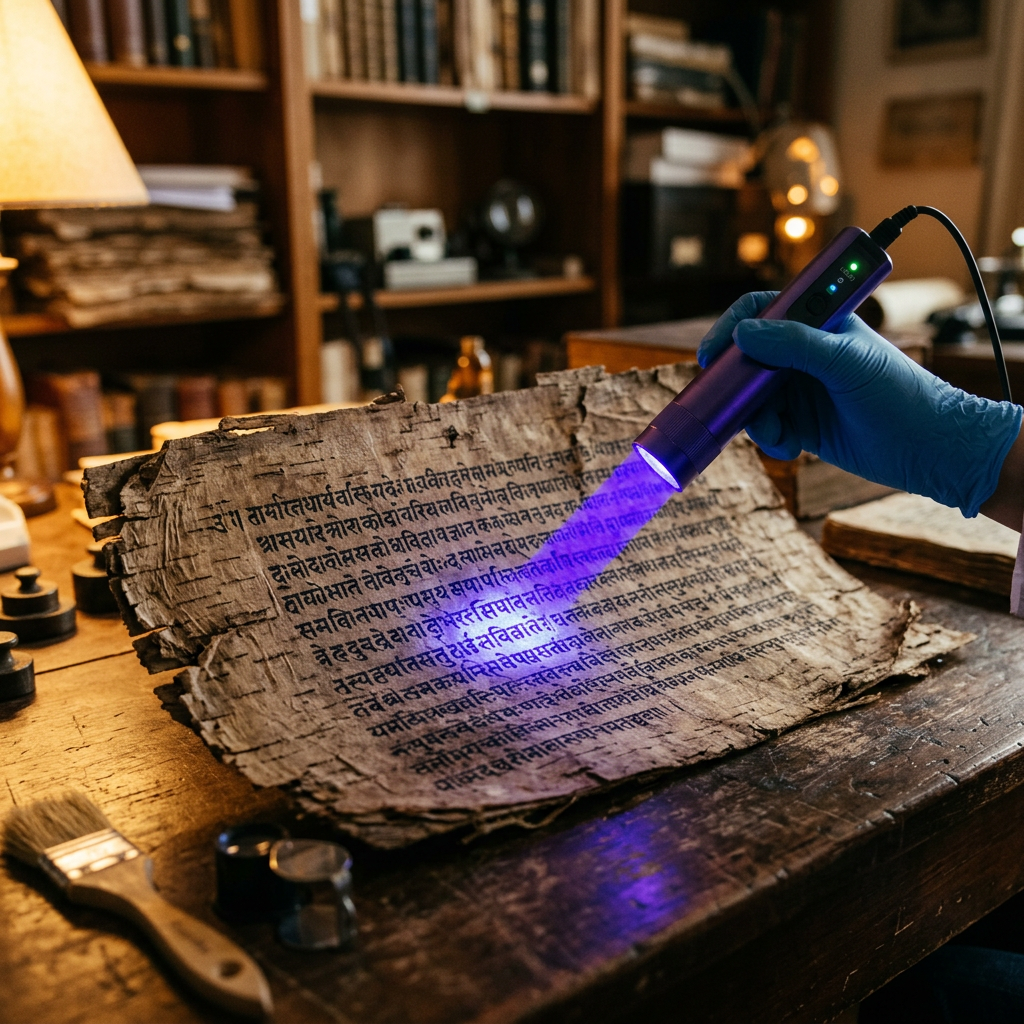
Scholars at the Oxford Centre for Hindu Studies have successfully deciphered a rare 6th-century palimpsest containing a lost commentary on the Vakya-Siddhanta. Using multi-spectral imaging and AI-assisted linguistic modeling, the team uncovered a series of complex mathematical verses that outline a previously unknown method for calculating lunar perigee fluctuations with a precision that rivals early modern European astronomy.
The manuscript, found in a remote monastic library in Nepal, provides significant evidence that ancient Indian astronomers used recursive algorithmic structures to model the non-linear motion of the moon. This research challenges the traditional timeline of mathematical development, suggesting that the Kerala School of Astronomy and Mathematics may have been building upon a much older tradition of sophisticated computational logic than previously recognized.