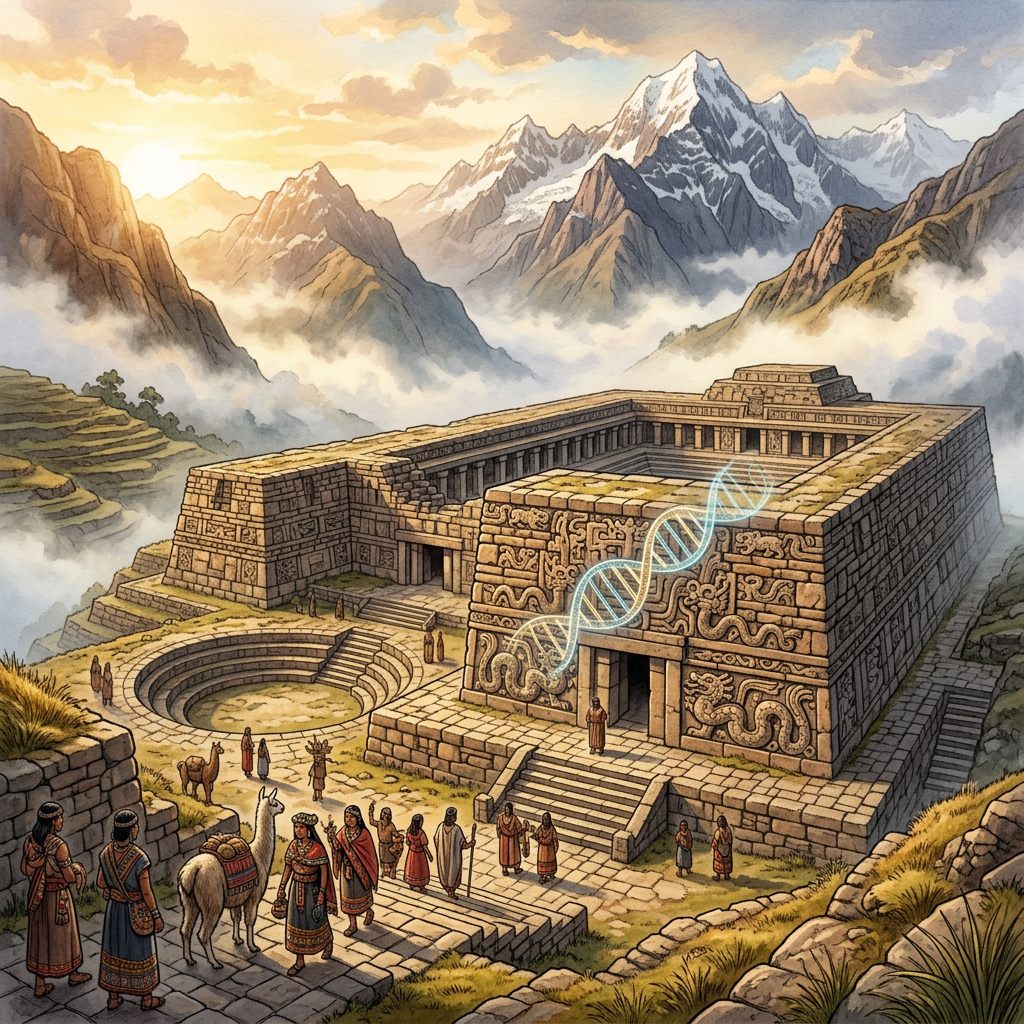
A breakthrough paleogenomic study published in Nature Genetics has mapped the ancestral heritage of the Chavín culture, a pivotal pre-Incan civilization in the Peruvian Andes. By analyzing the genomes of 24 individuals dating back to 1000 BCE, researchers identified a specific genetic signature associated with enhanced pulmonary efficiency and oxygen transport, marking the earliest known evidence of biological adaptation to extreme altitudes in this region.
The study reveals that the Chavín population was not a monolithic group but a complex genetic mosaic resulting from the convergence of diverse lineages from the Amazonian lowlands and the Pacific coast. This genetic mixing likely facilitated the rapid exchange of cultural and technological innovations, providing a biological foundation for the architectural and artistic sophistication observed at the Chavín de Huántar religious complex.