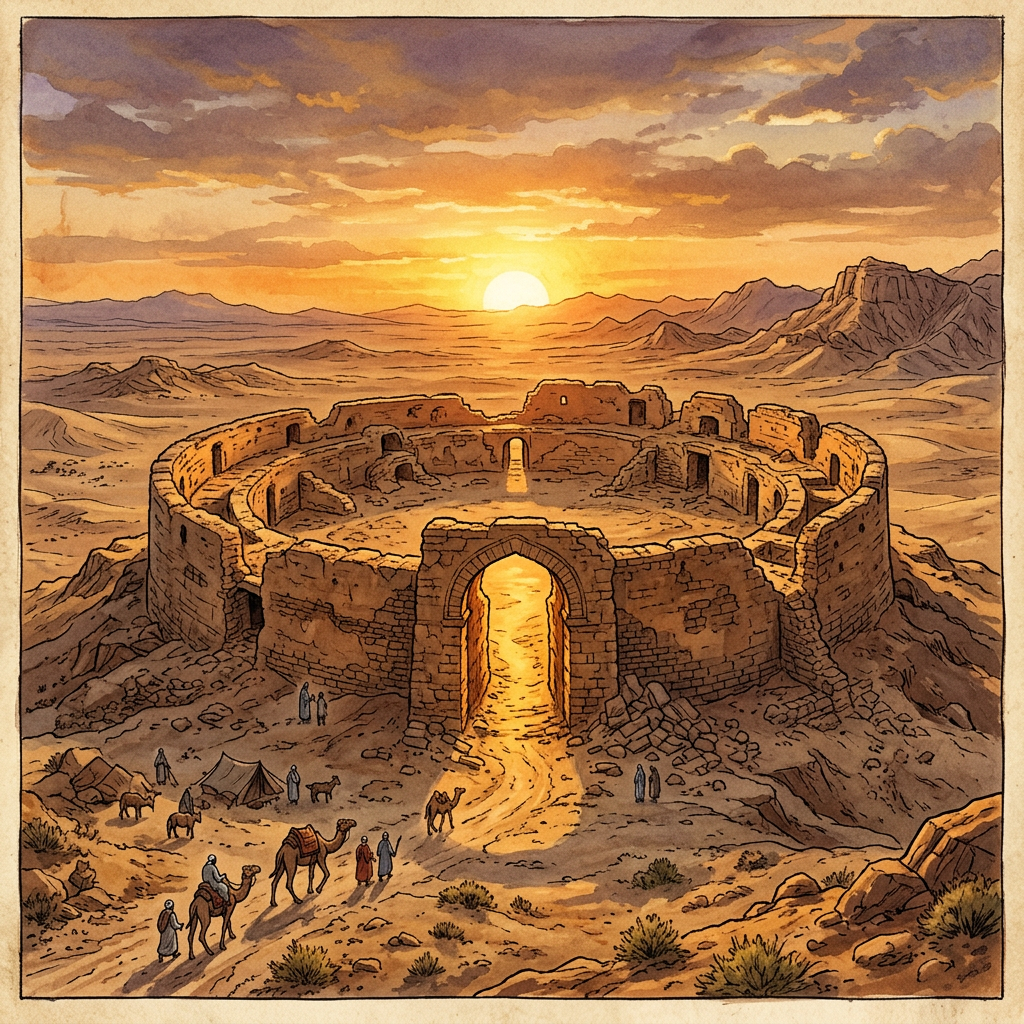
A joint international team of archaeologists has unearthed a monumental 3,500-year-old ritual complex in the Khuzestan Province of Iran. The site, attributed to the Middle Elamite Period, consists of a series of concentric stone circles and a raised central platform that researchers have identified as a sophisticated astronomical observatory.
The orientation of the primary gateway aligns perfectly with the winter solstice sunrise, while several auxiliary stone markers appear to track the synodic cycle of Venus. The discovery provides rare evidence of the high level of mathematical and observational precision achieved by Elamite scientists, who played a crucial role in the development of early Near Eastern cosmology.