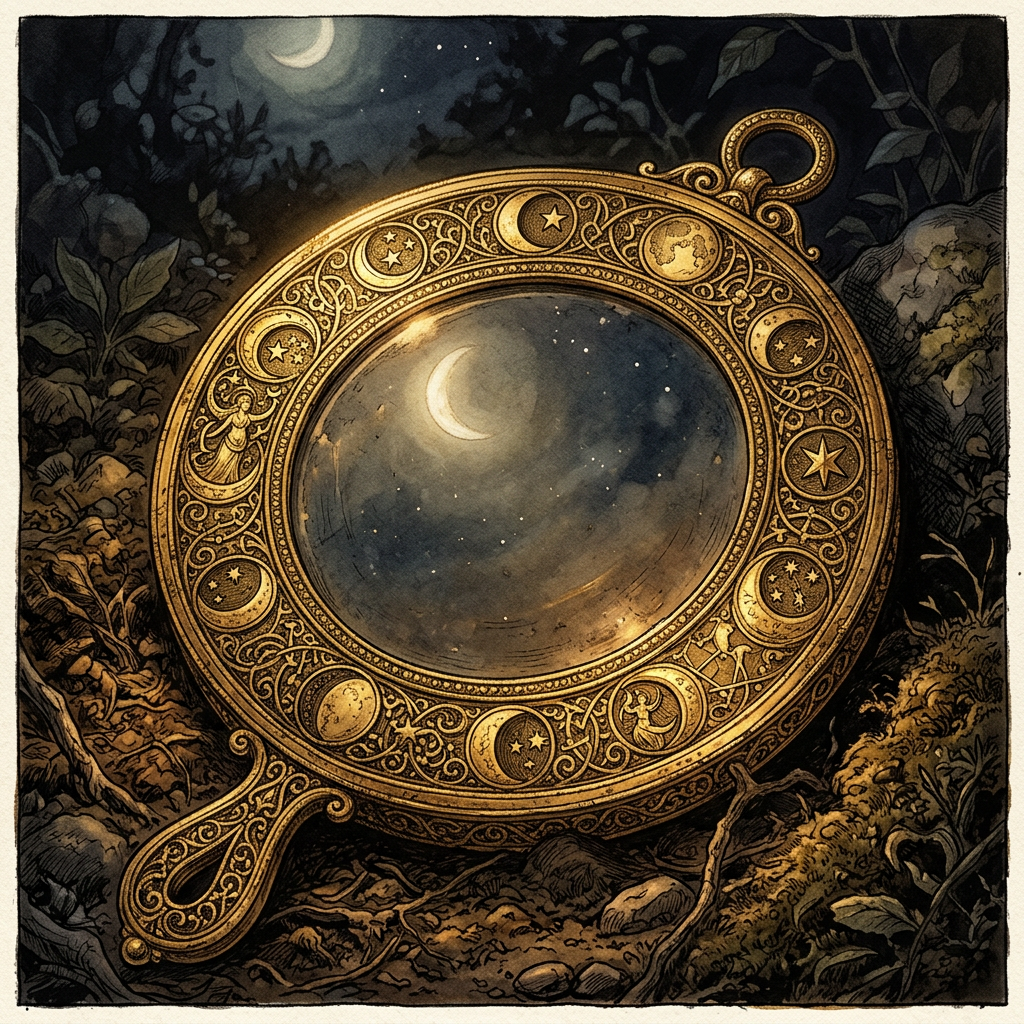
Archaeologists working in the southern Ural Mountains have unearthed a cache of stunningly preserved gold-filigreed ritual mirrors dating back to the 5th century BC. These artifacts, found within a high-status kurgan, or burial mound, are intricately decorated with lunar motifs and celestial patterns that scholars believe were used in nomadic Sarmatian lunar-greeting festivals. The mirrors were found alongside silver libation bowls, suggesting a complex ritual involving the reflection of moonlight into sacred liquids during the spring equinox.
Initial spectral analysis of the mirror surfaces reveals microscopic traces of herbal resins, indicating they were used to burn incense while reflecting the moon's light. This discovery provides the first physical evidence for the "Festival of the Silver Moon", a transitionary rite mentioned in later oral traditions of the Eurasian steppe but previously unconfirmed by archaeology. The alignment of the burial chamber suggests that these mirrors were positioned to capture the rising moon on specific ceremonial nights, highlighting the advanced astronomical knowledge of the Sarmatian elite.