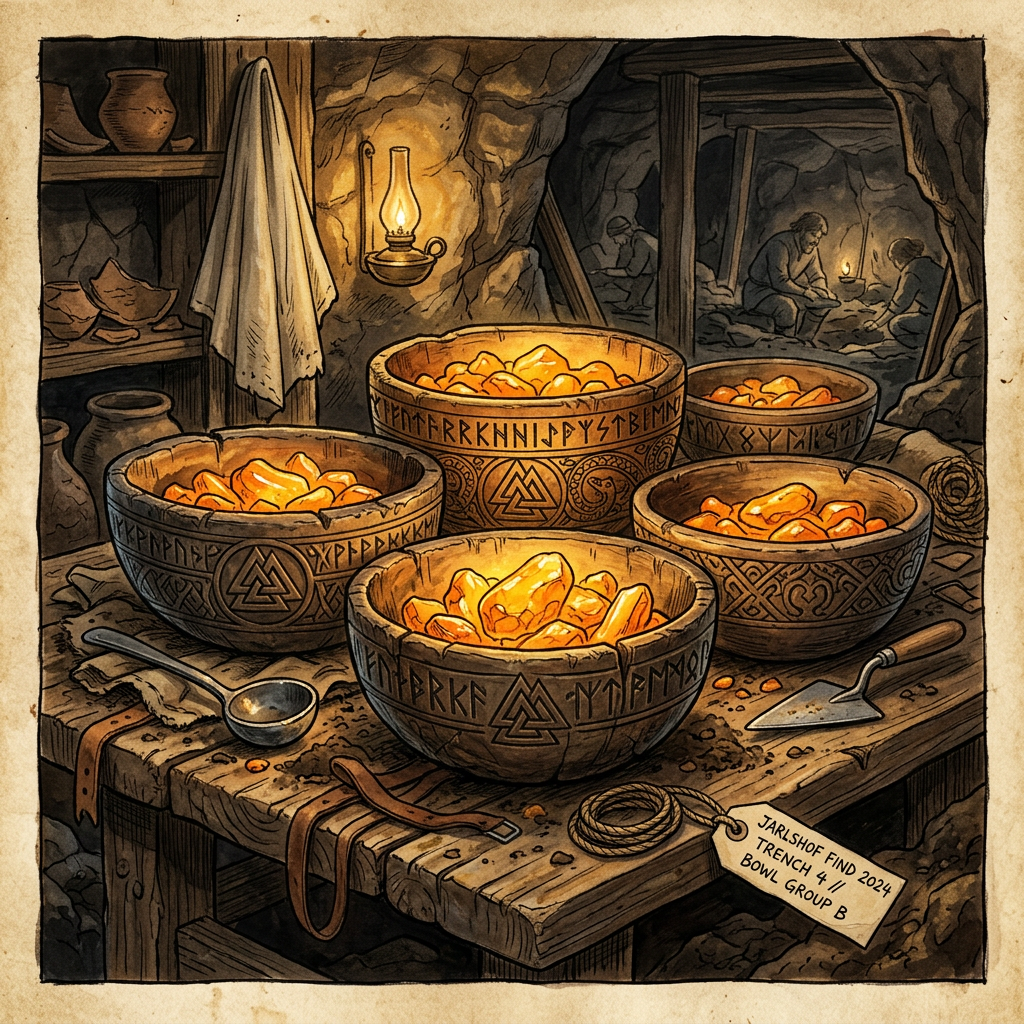
In a remote bog site in Northern Germany, researchers have discovered three amber-inscribed votive bowls that shed light on Bronze Age seasonal transitions. The bowls, carved from local oak and lined with thin sheets of translucent amber, bear rhythmic incisions that scholars interpret as early symbolic notations for the first frost. This discovery suggests the existence of a "Festival of the Cold Hearth," a communal ritual intended to protect stored grain from winter moisture and rot.
Chemical analysis of the amber reveals traces of fermented honey and wild berries, indicating that the bowls were used to consume a ceremonial draft during the harvest's end. The find is unique because it links the Amber Road trade networks directly to local agrarian festivals, as the high value of the material suggests these bowls were the centerpieces of high-status communal feasts. This discovery provides a rare glimpse into the sensory and material culture of prehistoric Germanic tribes during the arrival of winter.