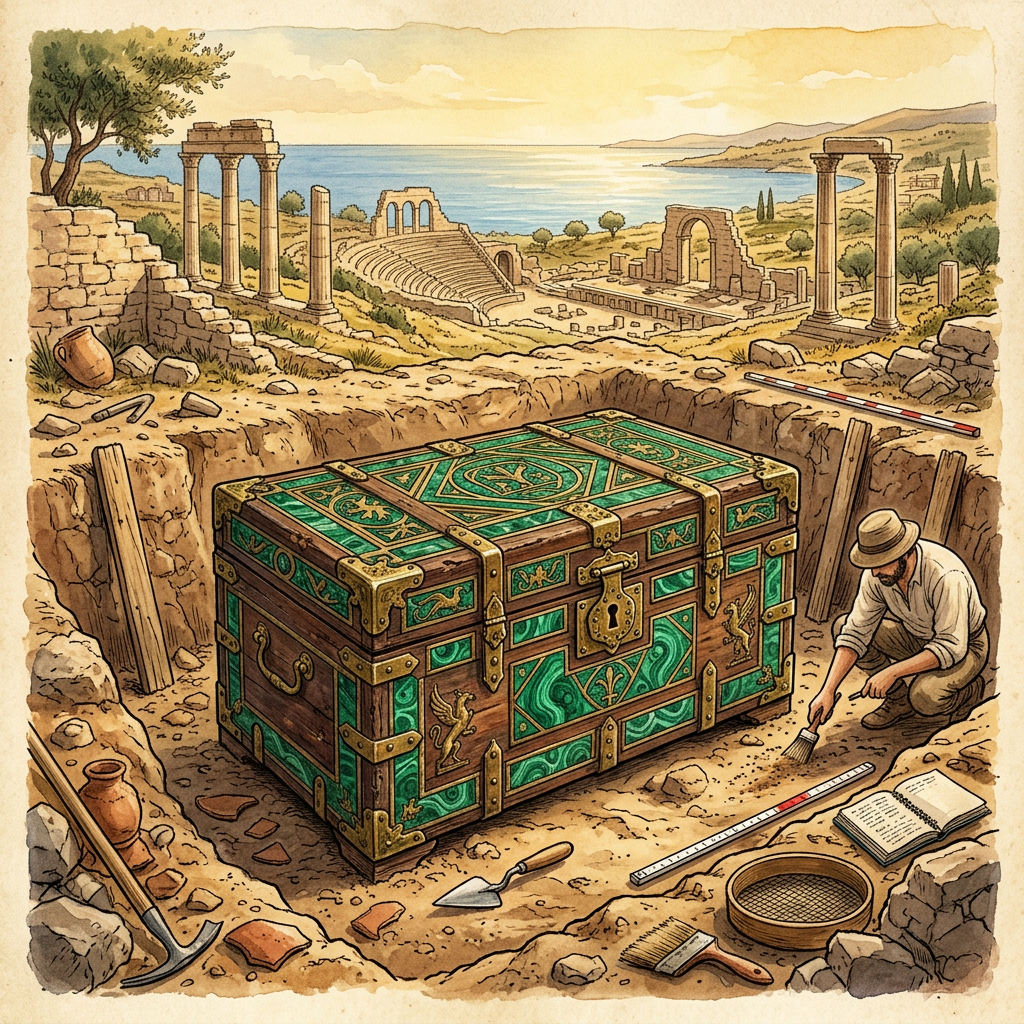
Deep within the ruins of Byblos, archaeologists have discovered several malachite-inlaid cedar chests that served as portable ritual repositories for ancient Phoenician sea-merchant festivals. These chests contained fragments of murex-dyed textiles and miniature lead anchors, which researchers believe were presented as votive offerings during the annual "Festival of the Safe Passage." The malachite decorations depict a lost maritime deity, providing new insight into the religious life of early Levantine sailors.
The chests were located in a specialized warehouse district, suggesting that the festival was not just a religious event but a highly organized economic ritual involving the blessing of trade cargo. The presence of malachite, likely imported from the Sinai, emphasizes the interregional connections maintained through these festivals. This discovery confirms that Byblos was a major hub for ceremonial logistics, where ritual and commerce were inextricably linked through multi-day celebrations honoring the protective spirits of the Mediterranean.