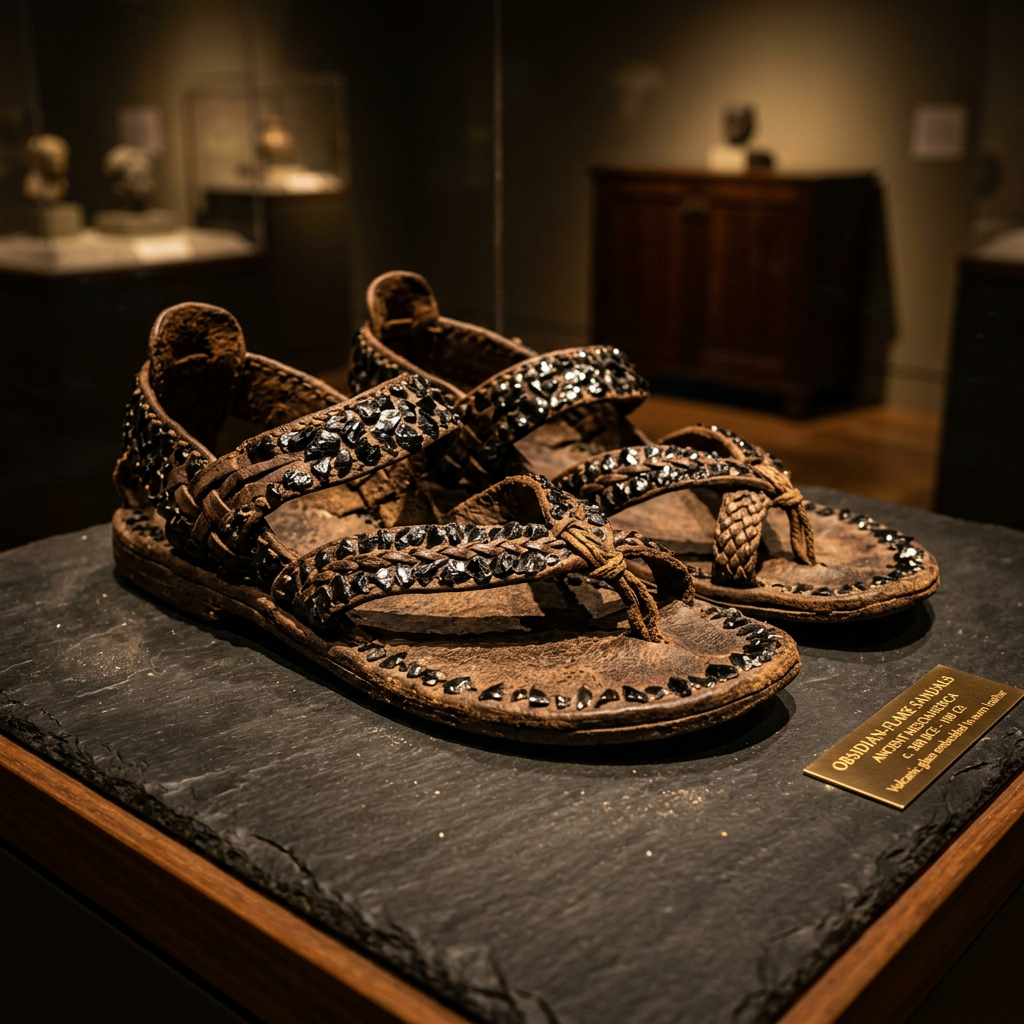
Archaeologists at Teotihuacan have unearthed a cache of obsidian-studded ritual sandals, offering startling evidence of ancient fire-walking ceremonies. Found beneath the Avenue of the Dead, the sandals feature thick soles embedded with polished obsidian flakes, which researchers suggest were symbolic protective elements for priests participating in New Fire processions. The find aligns with archaeological evidence of localized heat scarring on nearby ritual platforms, pointing to a previously misunderstood aspect of Teotihuacano performance art.
The sandals were found alongside ceremonial incense burners and charred remains of agave fibers, likely used as fuel for ritual paths. Experts believe these fire-walking parades were held every 52 years to synchronize the solar and ritual calendars, a tradition that predates the Aztec culture by centuries. This discovery redefines our understanding of public spectacle in the ancient metropolis, suggesting that endurance and sensory extremes were central to the communal religious experience of the city's inhabitants.