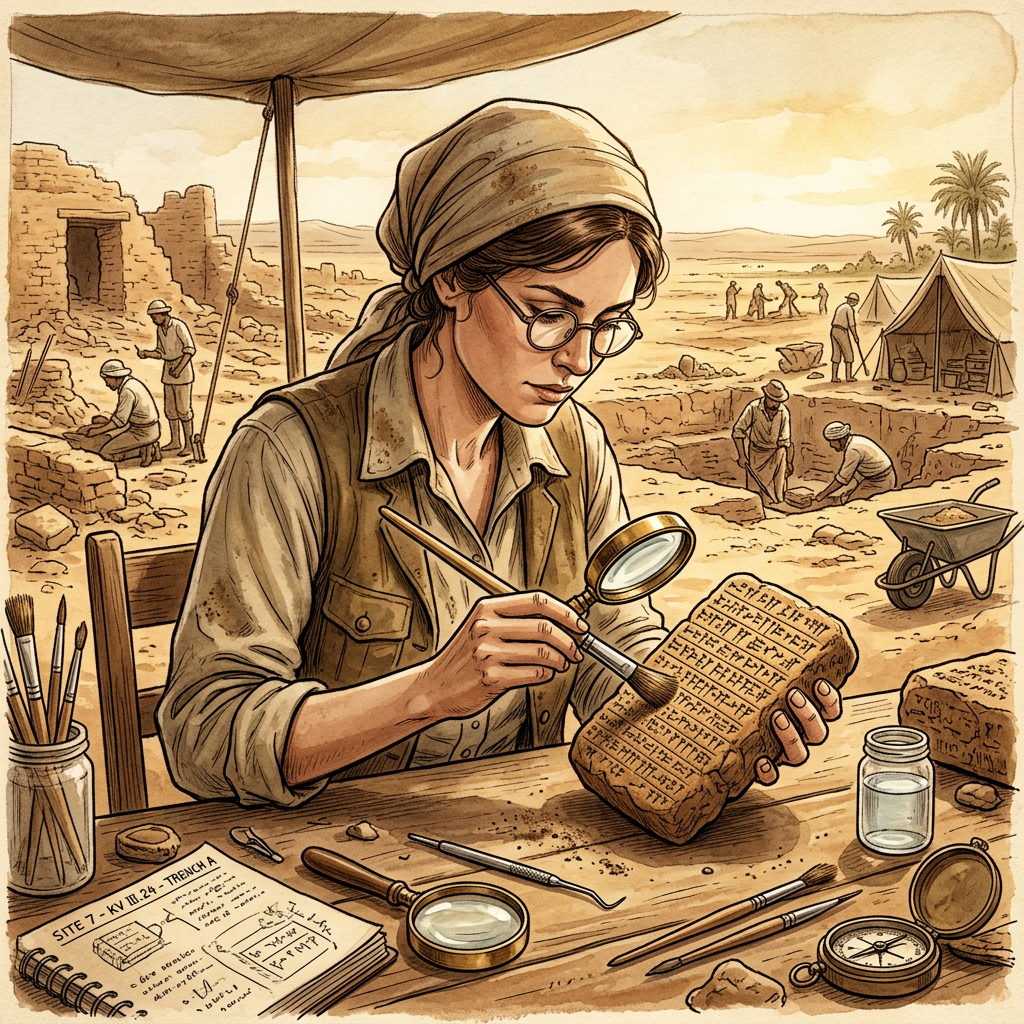
A new excavation at the ancient city of Girsu in modern-day Iraq has yielded a specialized cuneiform archive belonging to the official responsible for the city's reed supply. The tablets detail the classification and harvesting quotas for different species of sedge and reeds used in temple roofing, boat construction, and basketry.
The archive includes detailed labor assignments for harvesting teams and technical manuals specifying the ideal maturation times for 'temple-grade' reeds versus those used for reinforced mud-brick architecture. This discovery emphasizes the extraordinary bureaucratic precision the Sumerians applied to even the most basic natural resources required for their urban infrastructure.