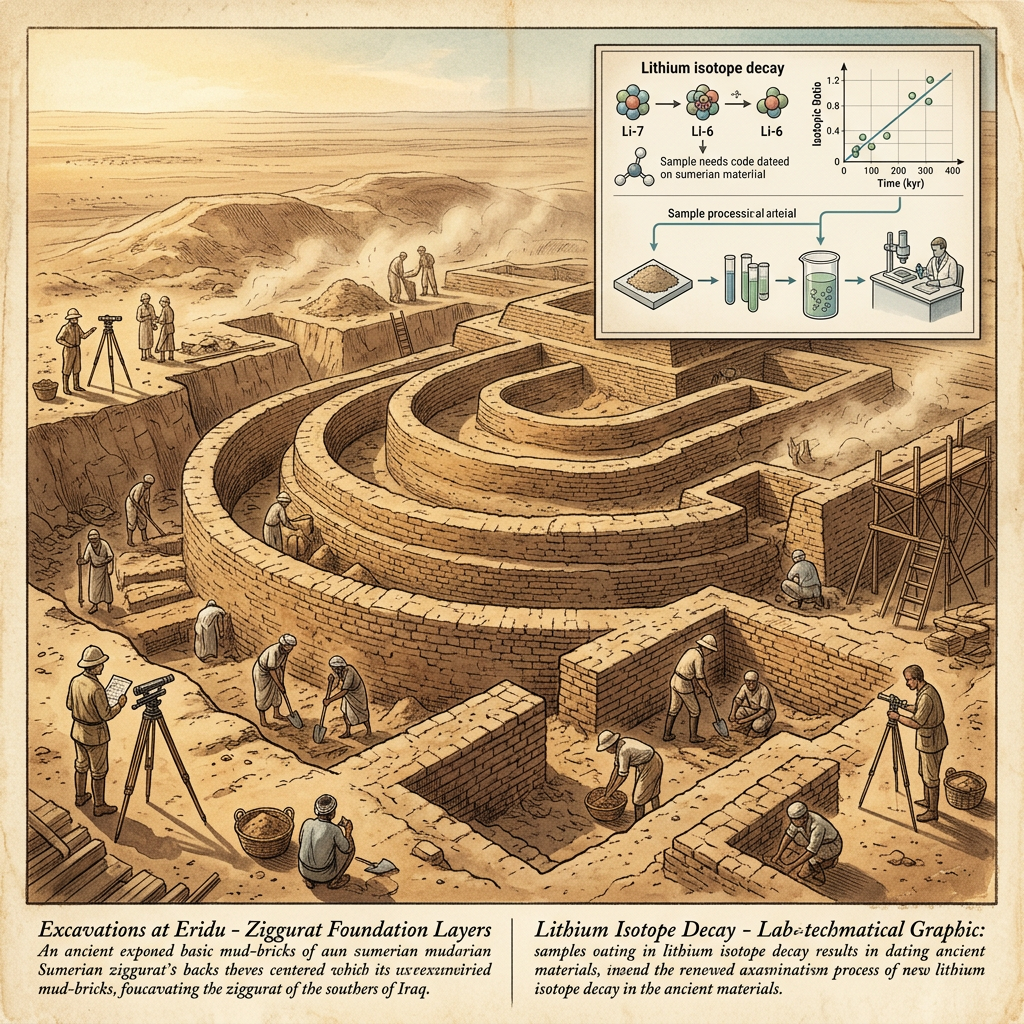
A breakthrough study in the Journal of Archaeological Science introduces a novel Lithium-isotope (Li-6/Li-7) fractionation methodology to date architectural residues. By measuring the isotopic drift in the baked mud-brick foundations of ancient Mesopotamian structures, researchers have refined the chronology of the Uruk expansion during the 4th millennium BCE with unprecedented sub-decadal precision.
This new methodology allows scientists to track the rapid urbanization pulses of the world's first cities. The data confirms that the transition from small settlements to complex urban hubs occurred in a series of staccato bursts rather than a slow, linear progression, providing new insights into the socio-economic drivers of early state formation and the environmental impact of early water diversion projects.