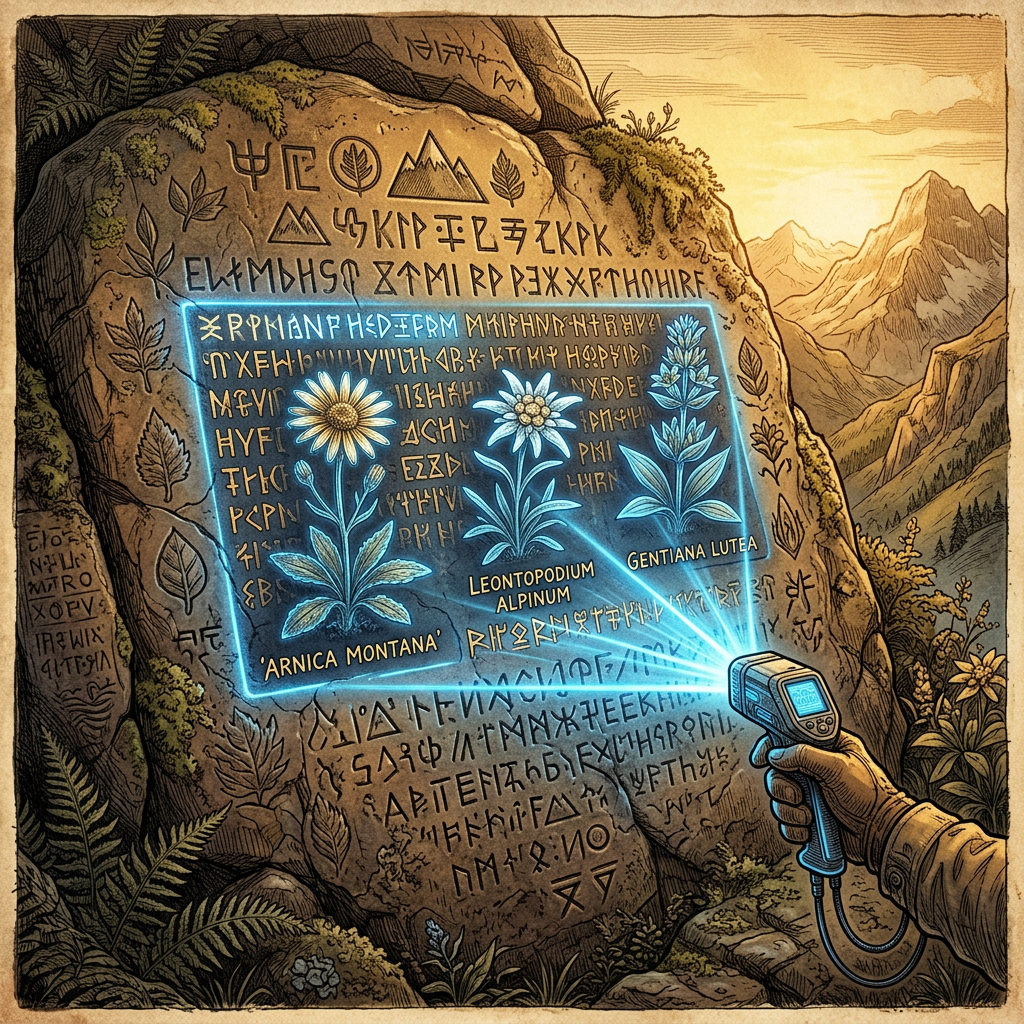
Archaeologists and AI researchers have successfully deciphered a series of rare Pali-Kharosthi hybrid inscriptions found in remote rock shelters in the Upper Indus Valley. The inscriptions, dating to the 7th century CE, detail lost medical protocols for treating high-altitude pulmonary edema using a systematic classification of Himalayan flora such as Rhodiola and Hippophae (sea buckthorn).
The decipherment was made possible through a neural paleography model trained on regional Gandharan epigraphs. The texts reveal that ancient healers maintained a sophisticated understanding of respiratory physiology and the oxygen-carrying capacity of the blood, providing detailed instructions on the distillation of phytochemicals for trade caravans traveling across the high-altitude Silk Road passes.