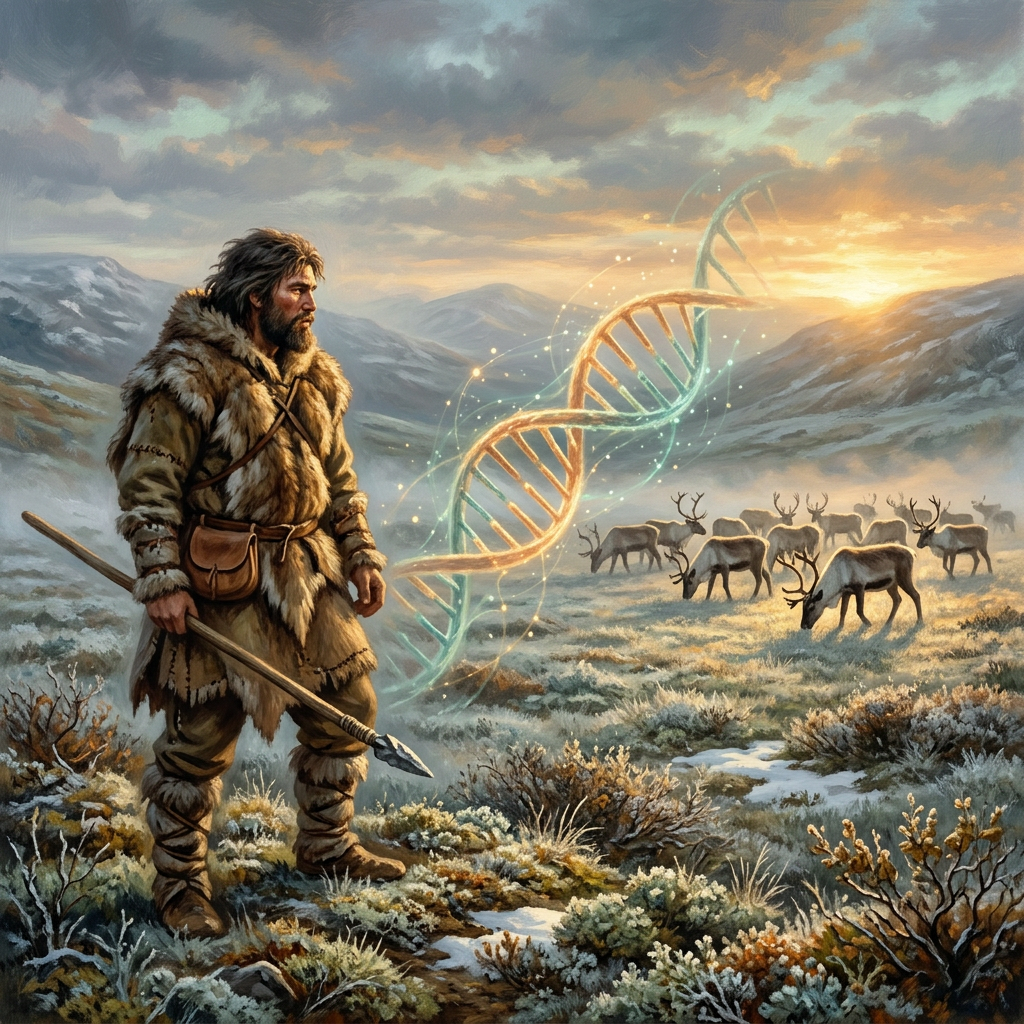
Recent paleogenomic research published in Nature Genetics has analyzed the skeletal remains of the Ahrensburgian culture foragers from the North German Plain. The study identifies a specific genetic marker on the FADS2 gene that allowed these Late Pleistocene hunter-gatherers to efficiently metabolize high-fat diets derived from concentrated reindeer consumption, a critical adaptation for survival in the sub-arctic conditions of the Younger Dryas period.
The research team utilized high-coverage shotgun sequencing on skeletal samples dating back to approximately 11,000 BCE. The findings suggest that this metabolic trait was a unique evolutionary response to the extreme seasonality of the European tundra, predating similar adaptations found in later Arctic populations by several millennia. This study provides a rare look at how climatic stressors during the final stages of the Ice Age directly reshaped the human genome.