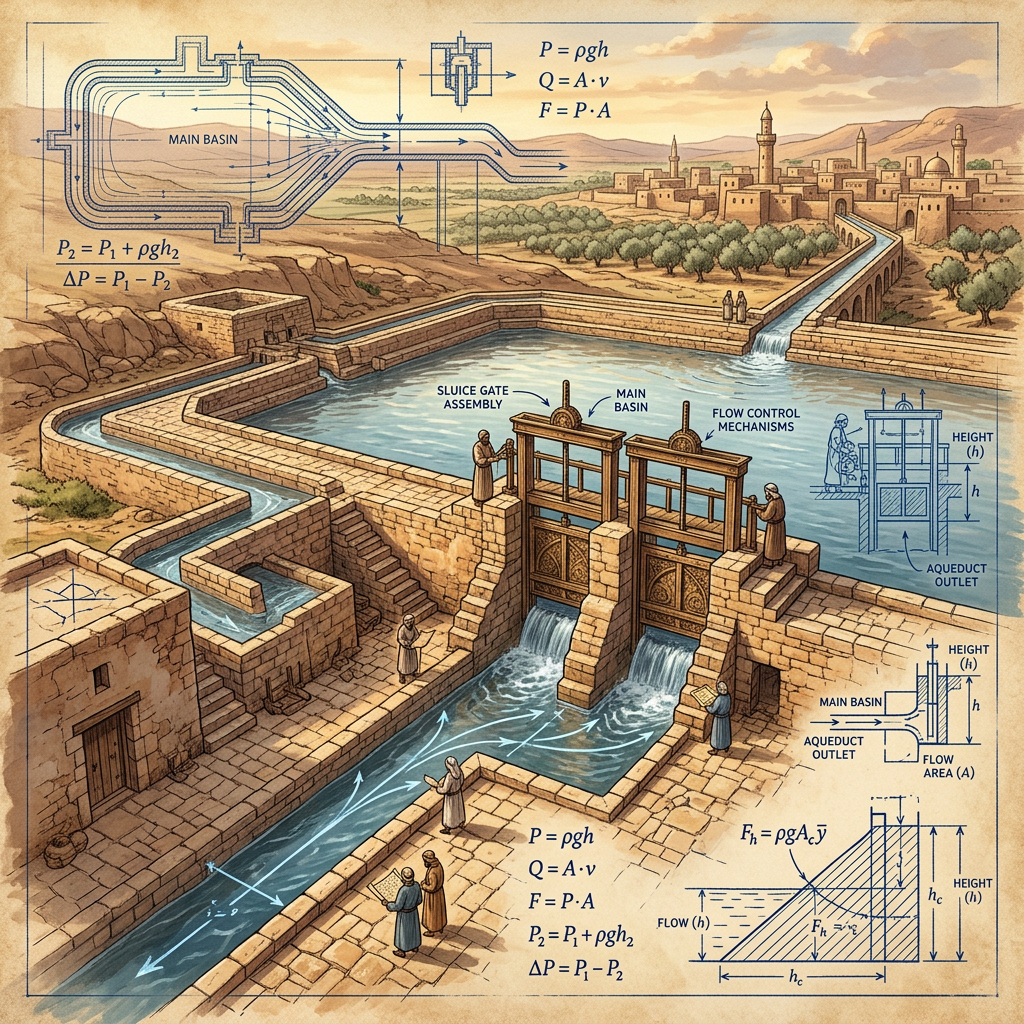
Structural engineers and Sanskrit scholars have collaborated on a landmark study of the Western Ganga dynasty's reservoir networks in southern Karnataka. The analysis of 9th-century inscriptions and site layouts reveals a mastery of fluid statics and hydraulic pressure relief. The builders used advanced mathematical formulas to calculate flow rates and hydrostatic head, ensuring the stability of massive stone dams against seasonal monsoon surges.
This research validates that the 'Jala-Siddhanta' principles described in ancient engineering manuscripts were not merely theoretical. The study proves that Western Ganga architects utilized precise geometrical ratios to design sluice gates and conduits that could withstand extreme physical stress, representing a pinnacle of pre-medieval water-management engineering in South Asia.