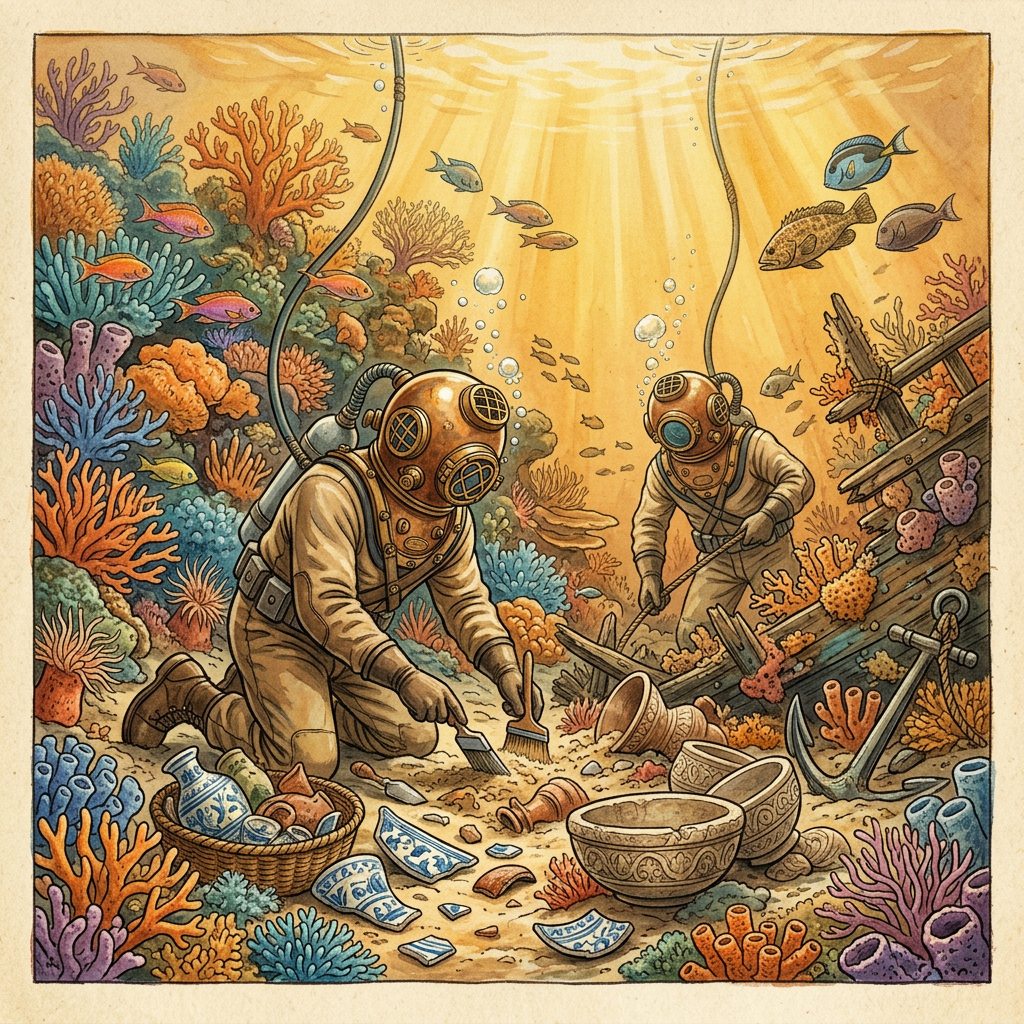
Marine archaeologists have identified a previously undocumented maritime trade route that connected the Comoros Archipelago in East Africa with the Persian Gulf during the 8th and 9th centuries. The discovery follows the excavation of a submerged coral-stone warehouse on the island of Anjouan, which contained fragments of Siraf-style glazed ceramics and carved soapstone vessels typically associated with the Abbasid Caliphate. This confirms that the islands served as a critical deep-water waypoint for merchants carrying ivory, timber, and rock crystal toward the Middle East.
Chemical analysis of the soapstone artifacts revealed that they were manufactured using raw materials from Madagascar, then refined in the Comoros before being shipped northward. This multinational trade network suggests that the Western Indian Ocean trade was far more integrated in the early medieval period than previously thought. Researchers believe this "Soapstone Seaway" was a precursor to the later Swahili Coast trading empires that dominated the region for centuries.