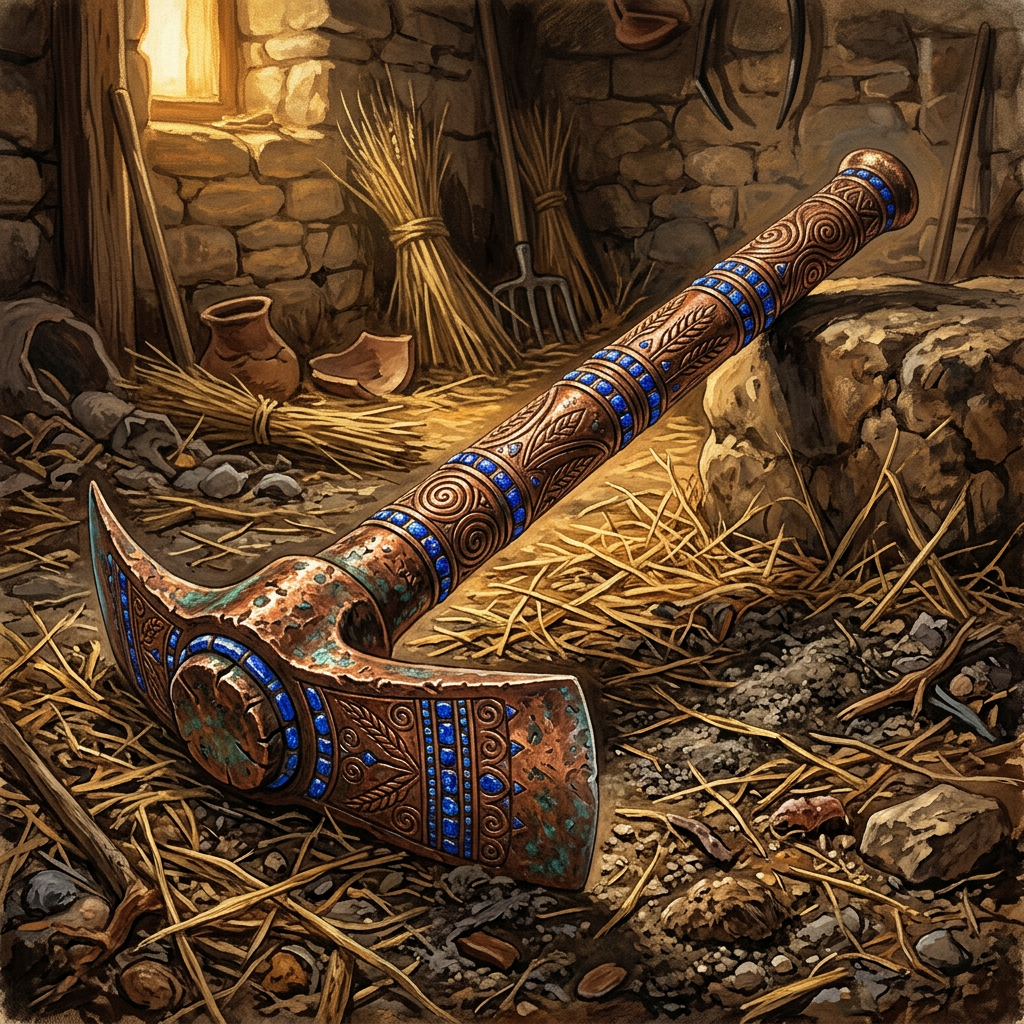
In the ancient Mesopotamian city of Lagash, researchers have discovered a set of lapis-incrusted copper seed-drills buried beneath the threshold of the Temple of Enlil. These ornate tools were not used for functional farming but were central to the Akitu, the Mesopotamian New Year festival. The drills represent the symbolic 'first sowing' performed by the king to ensure divine favor for the year's harvest.
The presence of lapis lazuli and gold leaf on the equipment indicates the high status of the spring sowing ritual, which occurred over twelve days during the month of Nisannu. This find bridges the gap between Sumerian religious texts and physical archaeological reality, proving that the ritualized agricultural performance was a foundational element of state power and cultural heritage in early urban civilizations.