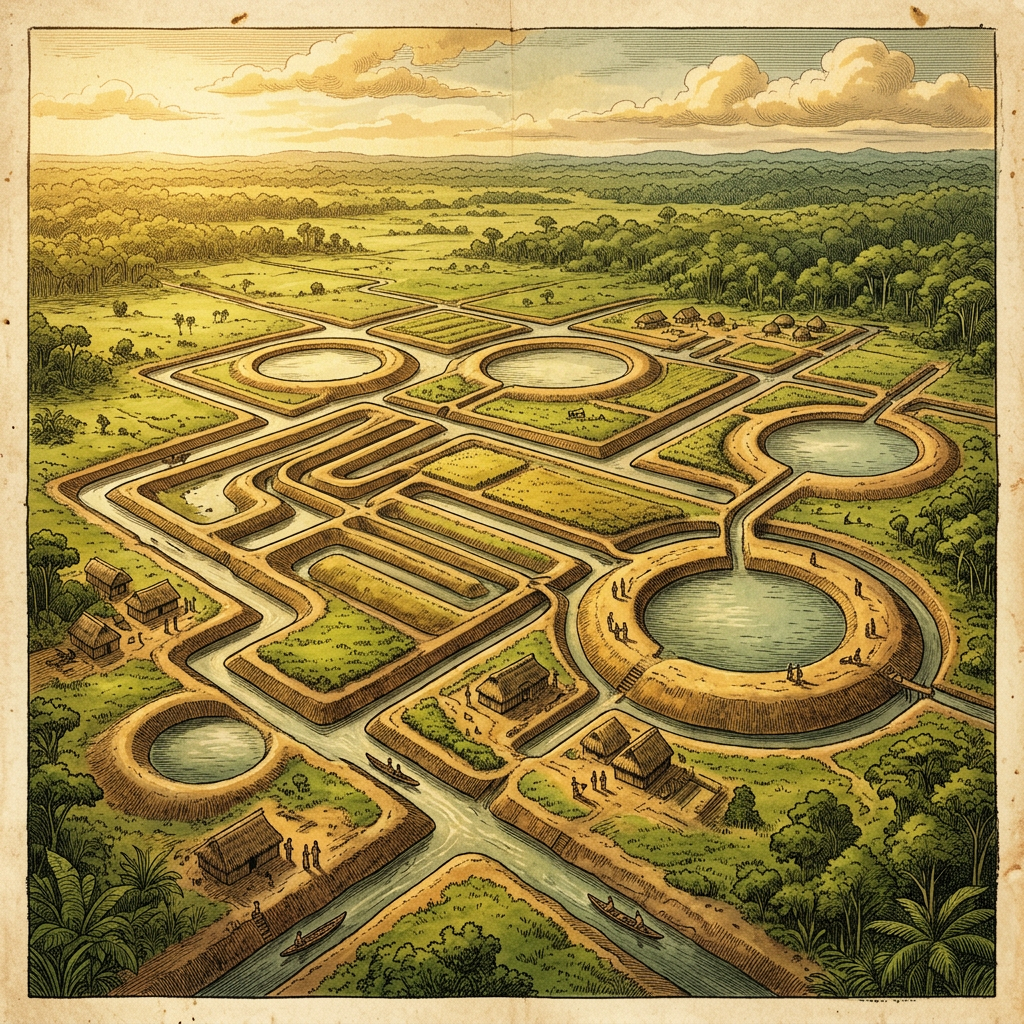
UNESCO has officially designated the complex earthen canal and pond systems of the Baures region in the Bolivian Amazon as a World Heritage site. These pre-colonial structures, dating back over 1,500 years, represent a monumental achievement in landscape engineering, allowing ancient societies to manage seasonal flooding and maintain large-scale fish weirs in a challenging tropical environment.
The designation highlights the site's importance as a model for sustainable water management in the face of modern climate volatility. International researchers note that the sophisticated hydraulic network effectively transformed the savannah into a highly productive 'domesticated landscape' that supported dense populations for centuries without depleting local biodiversity.