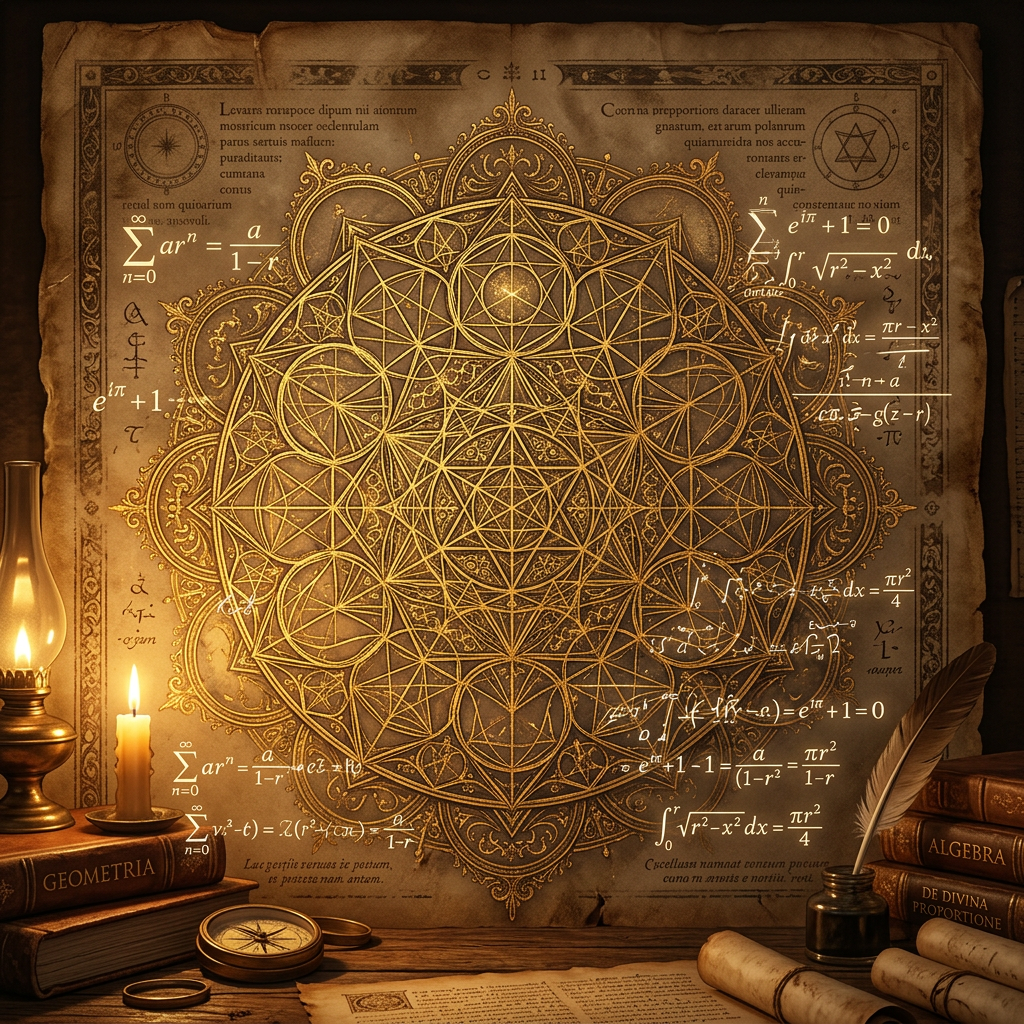
A recent scholarly publication in the Mathematical Heritage Journal argues that the 8th-century Sanskrit manuscript Siddhanta-Samuccaya contains the fundamental principles of symmetry groups. Historians of mathematics at Oxford University discovered that the text describes the rotation and reflection properties of complex polygons using a symbolic notation that mirrors the logic of modern group theory.
This discovery suggests that ancient Indian mathematicians had formalized the study of algebraic structures in geometry nearly a thousand years before Evariste Galois and Niels Henrik Abel. The text specifically applies these group-like operations to solve problems in architectural tiling and the calculation of surface areas for irregular geometric bodies, showcasing a high level of abstraction in early medieval South Asian mathematics.