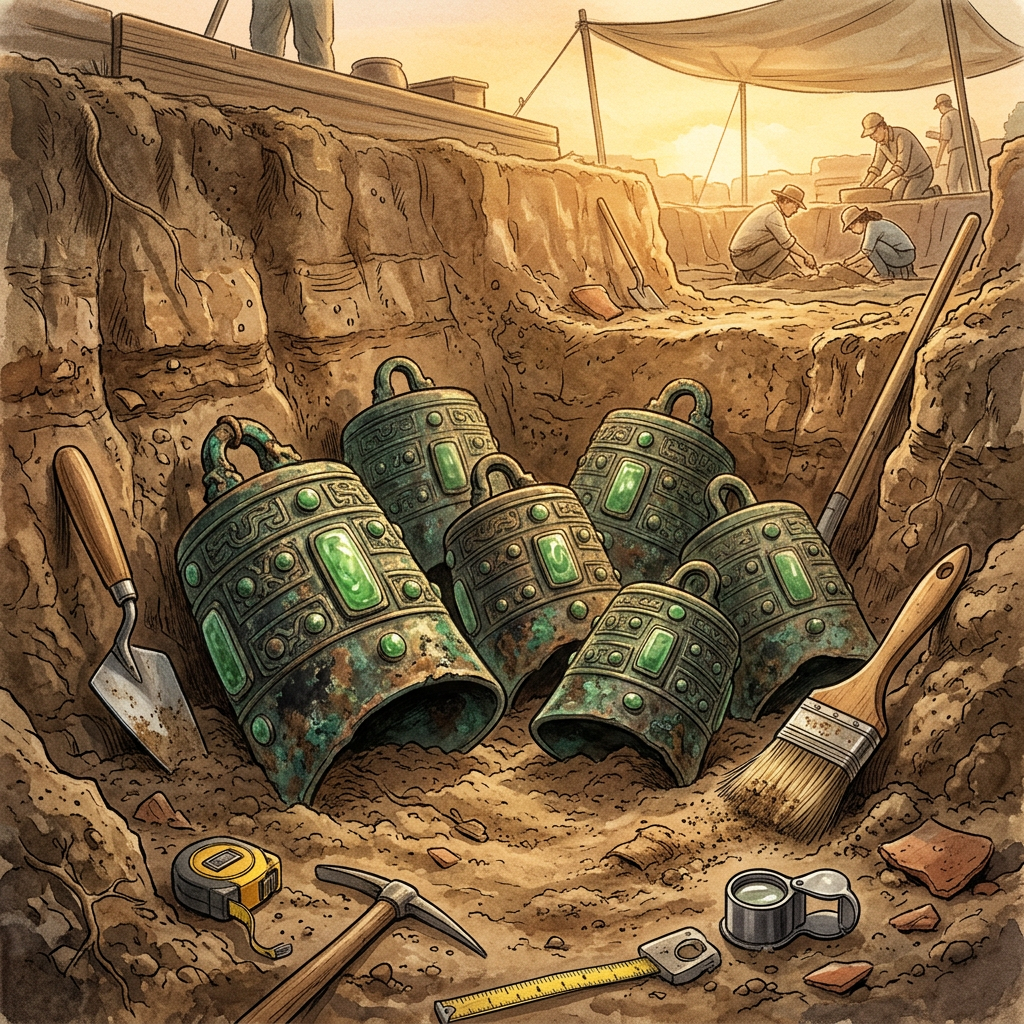
Excavations at a Chu State cemetery in China's Hubei Province have unearthed a set of sixteen bronze bells intricately inlaid with nephrite jade. These musical instruments were found in a specialized ceremonial chamber, accompanied by silk remnants and inscriptions detailing their use during the 'Call of the First Thunder', a seasonal transition festival meant to wake the earth for planting.
Archaeologists state that the discovery provides the first physical evidence of the rhythmic requirements for these ancient state rituals. The bells are tuned to a specific pentatonic scale, designed to mimic the low rumble of spring storms. This find suggests that early Chinese agricultural festivals were highly organized events involving complex musical choreography and specific mineral offerings to local river deities.