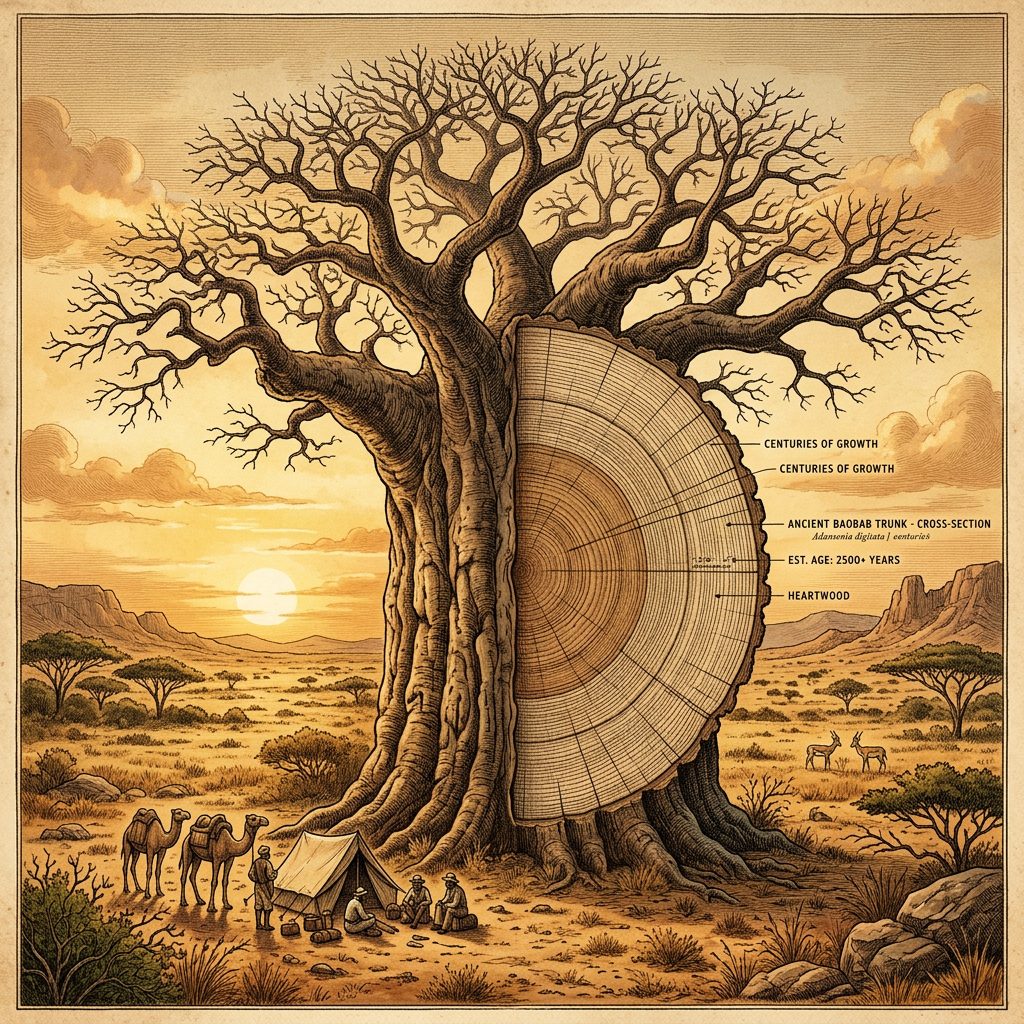
A breakthrough study published in Environmental History Today reveals that ancient civilizations in the Limpopo Valley developed highly sophisticated agroforestry techniques to survive centurial drought cycles. By analyzing the rings of 1,500-year-old baobab trees, climate archaeologists identified evidence of intentional water-harvesting basins and the strategic planting of native fruit trees that helped maintain soil moisture during the 'Great Aridity' of the 6th century.
The research demonstrates that these drought-resistant systems allowed local populations to sustain large-scale settlements when neighboring regions were being abandoned. These findings offer modern conservationists a blueprint for resilient land management in semi-arid regions, proving that traditional ecological knowledge is a vital tool for combating current climate instability.