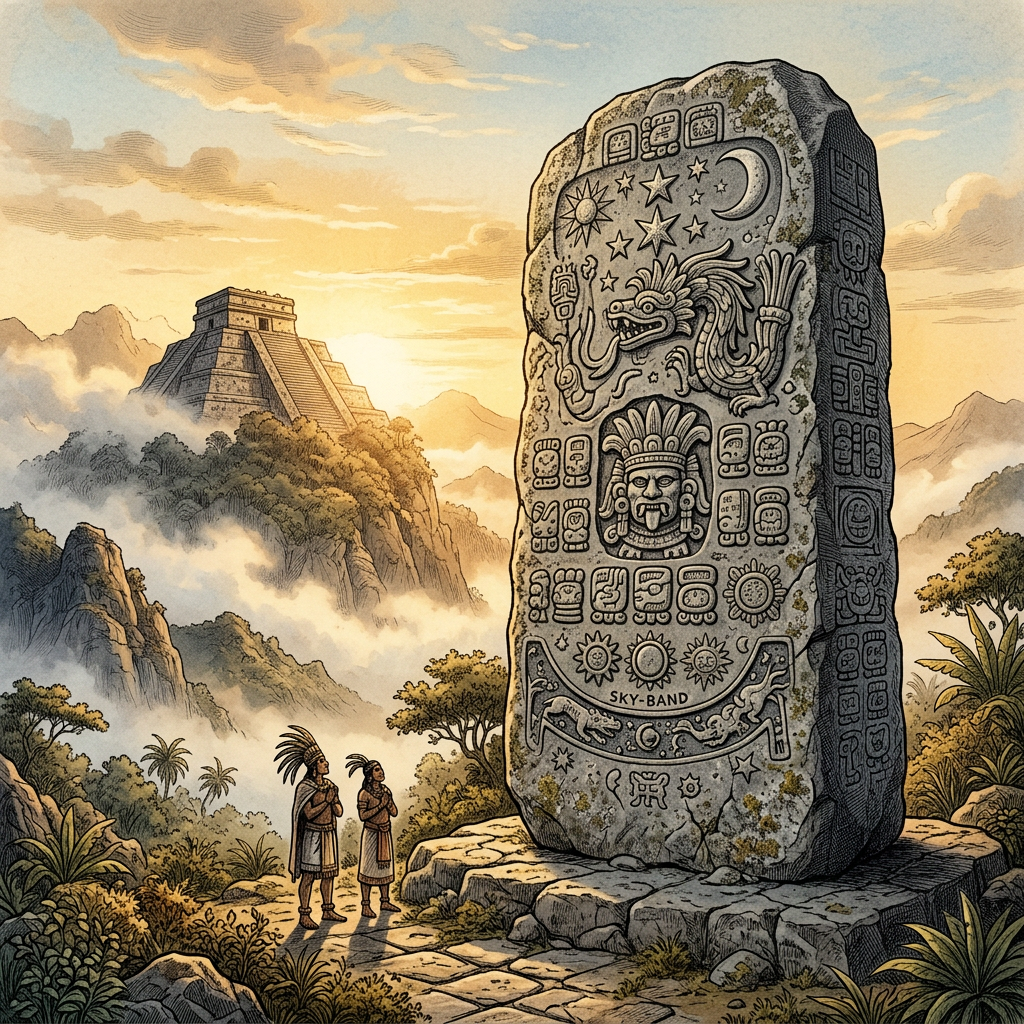
A breakthrough in the decipherment of stone inscriptions at the Monte Albán archaeological site has revealed a sophisticated philosophical system known as Tlamatiliztli. Dating back to approximately 450 BCE, these glyphs outline an ethical framework centered on the concept of 'Reciprocal Existence,' suggesting that the balance of the universe depends on the moral alignment of individual human thoughts with the rhythms of the natural world.
The text challenges the long-held view that early Mesoamerican societies were primarily focused on ritual sacrifice, revealing instead a deep metaphysical tradition regarding the fluidity of time and the interdependency of all living beings. Researchers believe this 'philosophy of balance' shares striking parallels with ancient Vedic concepts of Rta, indicating a universal human drive toward understanding cosmic order across geographically isolated civilizations.