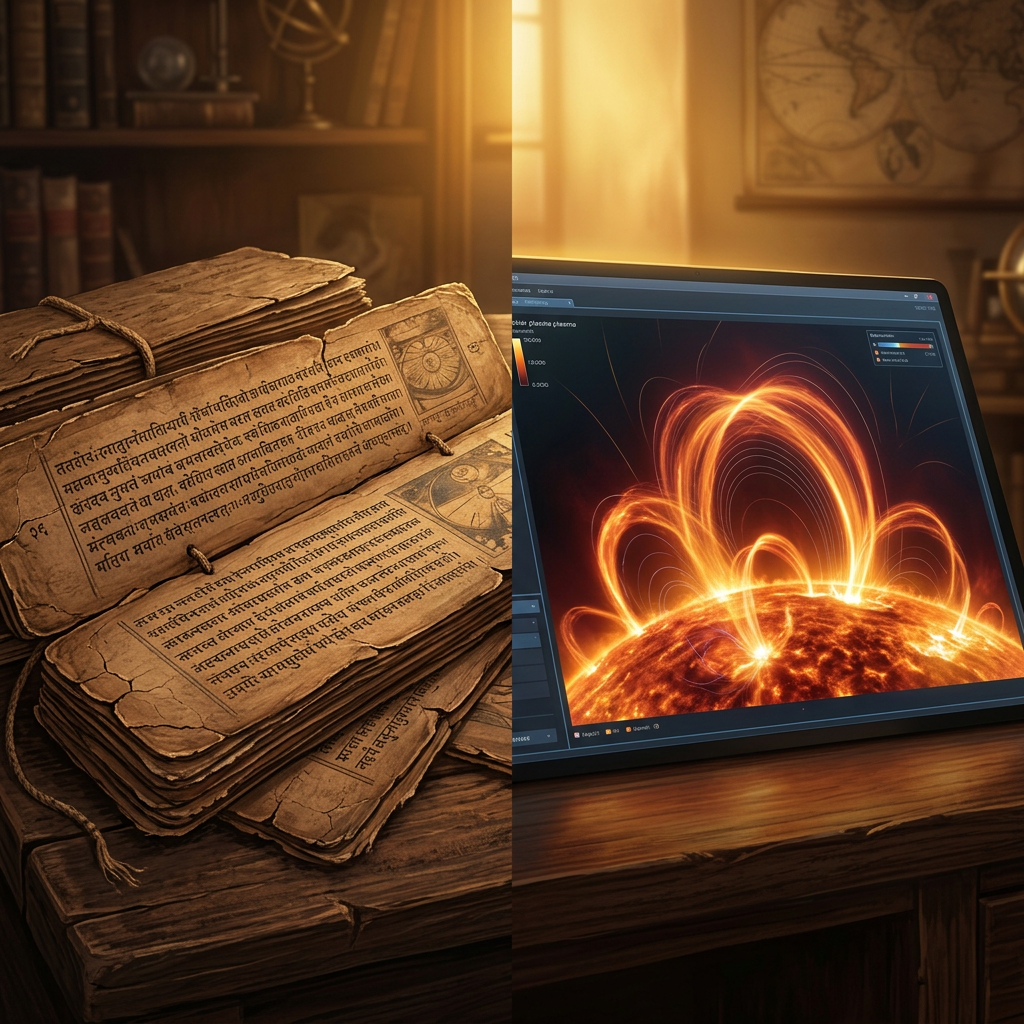
Researchers at the Institute of Ancient Science have completed a computational analysis of recently digitized 11th-century Surya-Kiran manuscripts found in the Malabar region. The study reveals that ancient Indian astronomers used sophisticated recursive algorithms to model non-linear solar flare events and their periodic impact on the Earth's atmosphere. These models predated modern magnetohydrodynamic theories by several centuries.
The manuscript details a series of mathematical tables that correlate observed solar disk obscurations with specific atmospheric disturbances. By applying modern verification techniques, the researchers found that the Sanskrit algorithms accurately predicted major solar activity cycles recorded in tree-ring data from the same period. This research highlights the high degree of precision achieved in medieval Indian observational astronomy and its relevance to historical climate modeling.