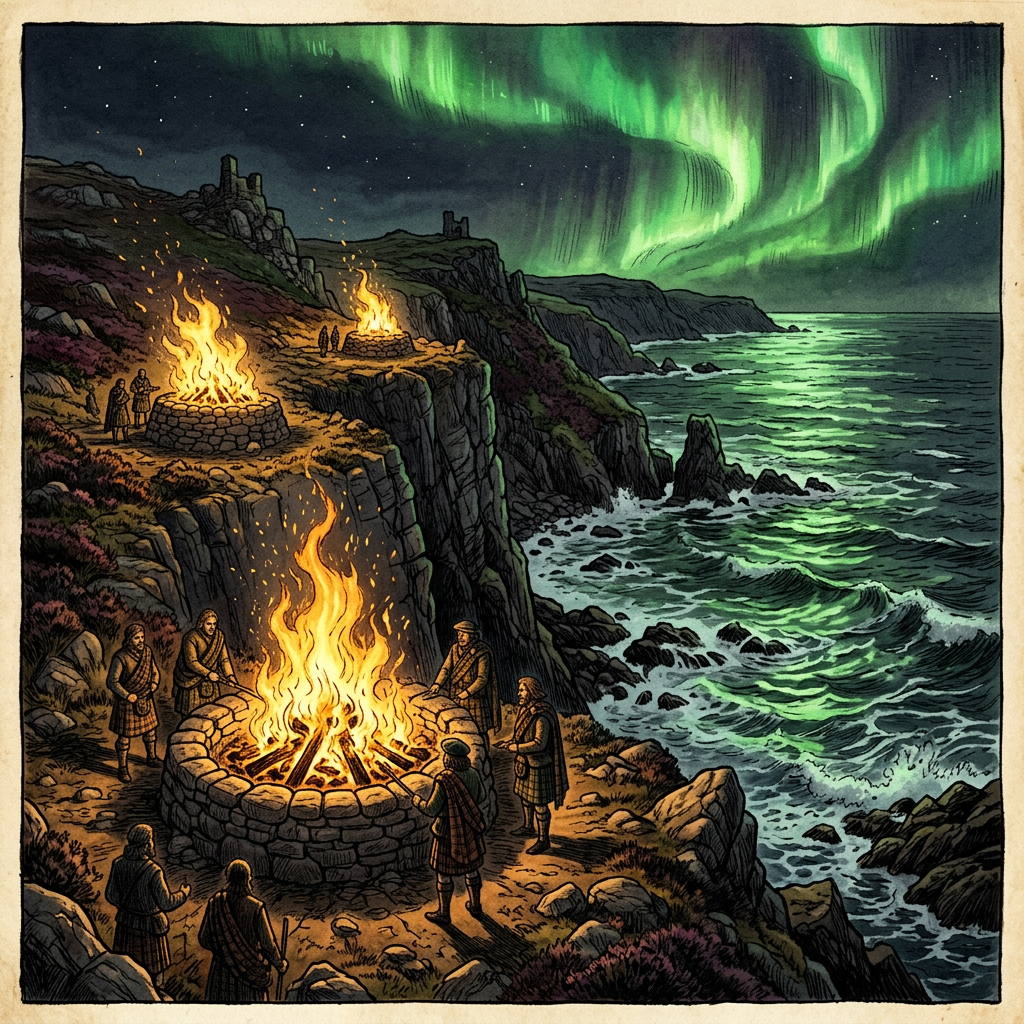
New excavations on the Isle of Skye have revealed a series of stone-lined pits containing the chemical residue of whale oil and bone charcoal. Radiocarbon dating places these features in the Late Bronze Age, and their alignment with the peak visibility of the Aurora Borealis suggests they were used for a forgotten "Festival of the Northern Lights" or a similar celestial winter celebration.
The extreme heat generated by the whale oil would have created massive, sustained flames visible from the mainland, serving as a maritime beacon and a focal point for communal feasting. This ritual site offers a rare glimpse into how prehistoric northern communities perceived and responded to atmospheric phenomena through large-scale fire-based performances.