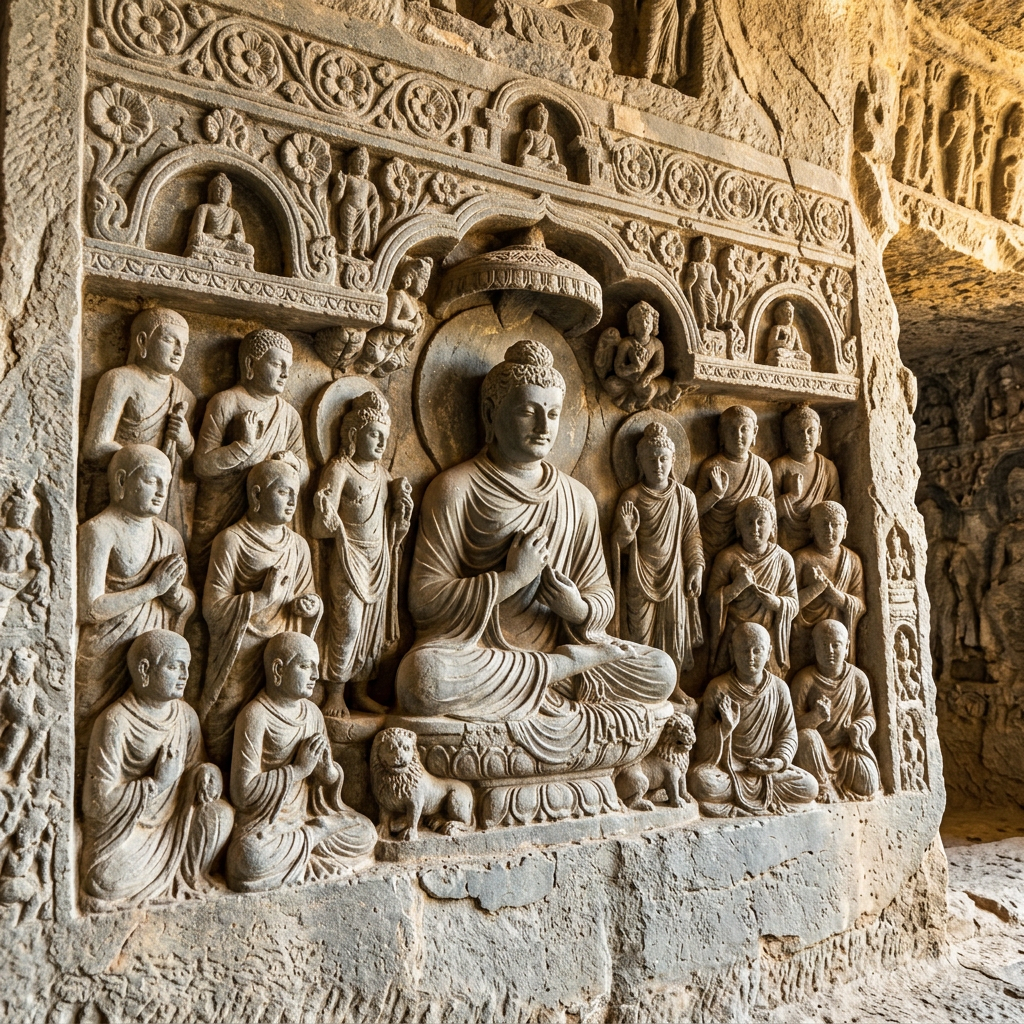
A team of archaeologists has unearthed a significant Kushan-era Buddhist temple and monastic complex in the Peshawar Valley. Dating to the 2nd-century CE, the site features a central stupa surrounded by a series of small shrines. The highlight of the find is a series of intact Gandharan-style stucco reliefs that depict scenes from the life of the Buddha, showing distinct Greco-Buddhist artistic influences.
The reliefs are notable for their extraordinary detail, including the facial expressions of the devotees and the draped garments of the figures. Excavations also revealed several clay seals used by the resident monks and fragments of birch-bark manuscripts in the Kharosthi script. This discovery reinforces the Peshawar Valley's status as a major hub of early Buddhist learning and artistic innovation along the Silk Road trade routes.