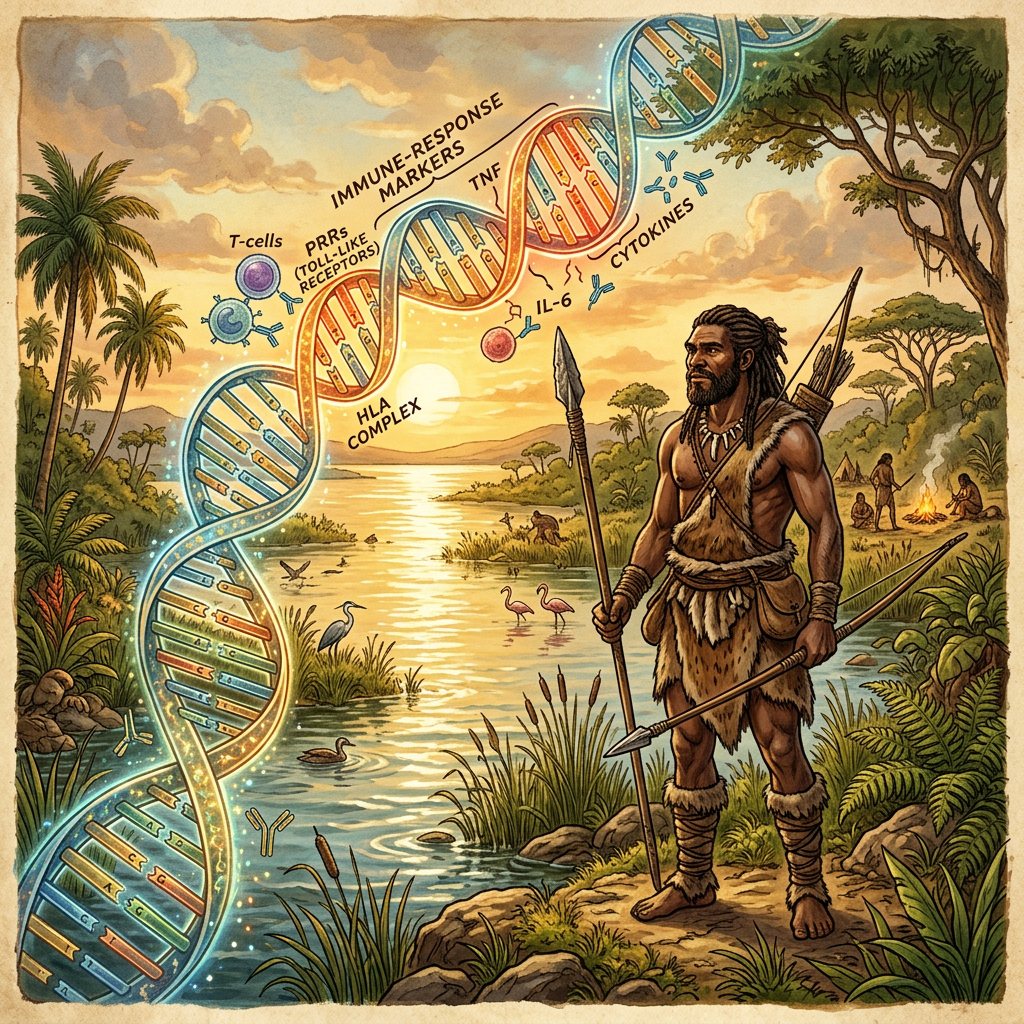
A ground-breaking study published in Nature Genetics has analyzed the genomes of skeletal remains dating back to 9000 BCE found in the Lake Turkana region of East Africa. The research identifies a previously unknown genetic divergence specifically linked to the immune system's response to arboviral pathogens transmitted by ticks. This findings provide a direct link between the early Holocene environmental shifts in the Rift Valley and the selective pressure on the human genome to adapt to localized diseases.
The study, led by a multi-disciplinary team of paleogenomicists and epidemiologists, suggests that the migration patterns of early hunter-gatherers were heavily influenced by these 'pathogen barriers.' By mapping these genetic markers, researchers can now trace how early African populations navigated high-risk zones while developing the biological resilience necessary to inhabit the lush but biologically challenging basins of the Great Rift.