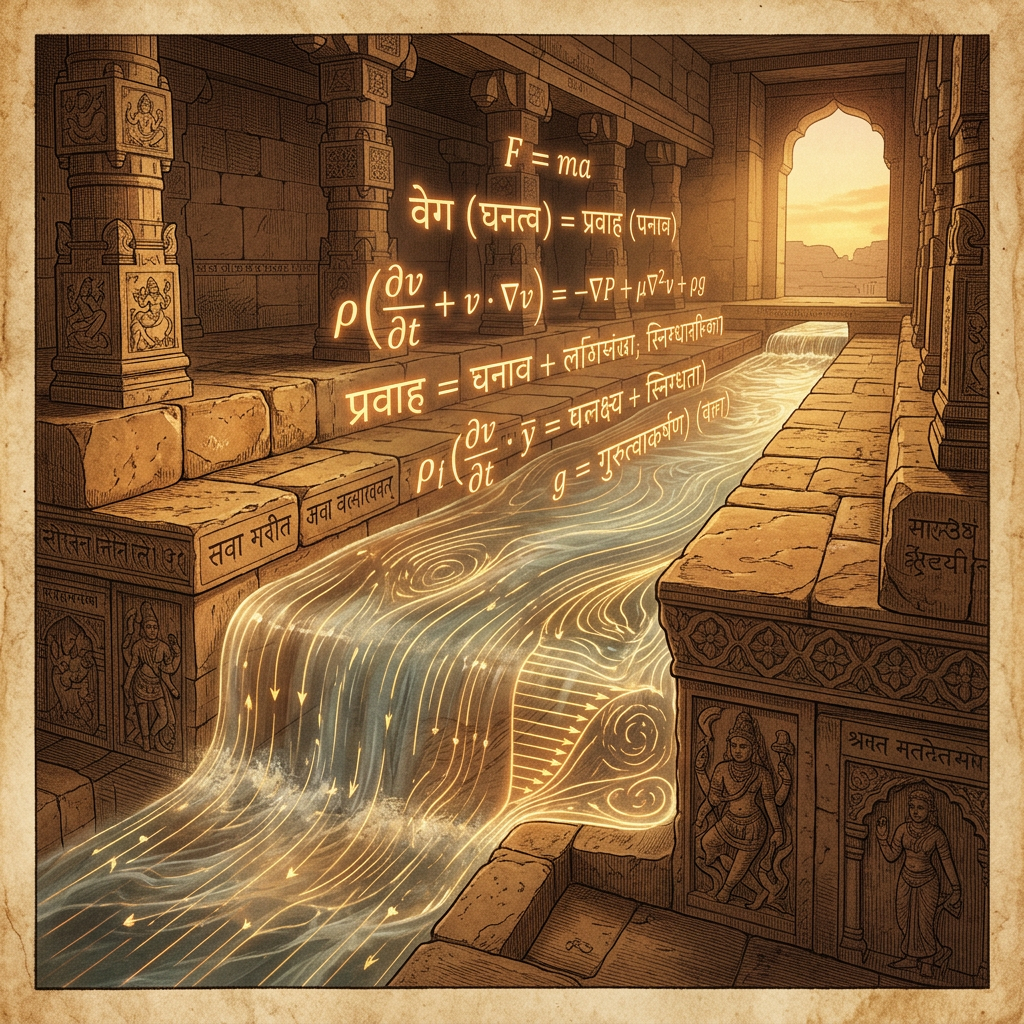
New research published in the International Journal of Vedic Mathematics has identified advanced fluid dynamic models within the 12th-century Ganita-Muktavali manuscripts. Computational modeling of the text's mathematical proofs reveals that medieval Indian scholars had developed specific algorithms to calculate viscous drag and boundary layer interference in open-channel aqueduct systems.
The study demonstrates that these Sanskrit algorithms were used to optimize the flow rate of gravity-fed irrigation networks, allowing for the transportation of water over several kilometers without significant siltation or energy loss. This discovery suggests that the engineering of medieval Indian step-wells and irrigation channels was backed by a sophisticated theoretical understanding of fluid mechanics that predates similar concepts in the Western scientific tradition by several centuries.