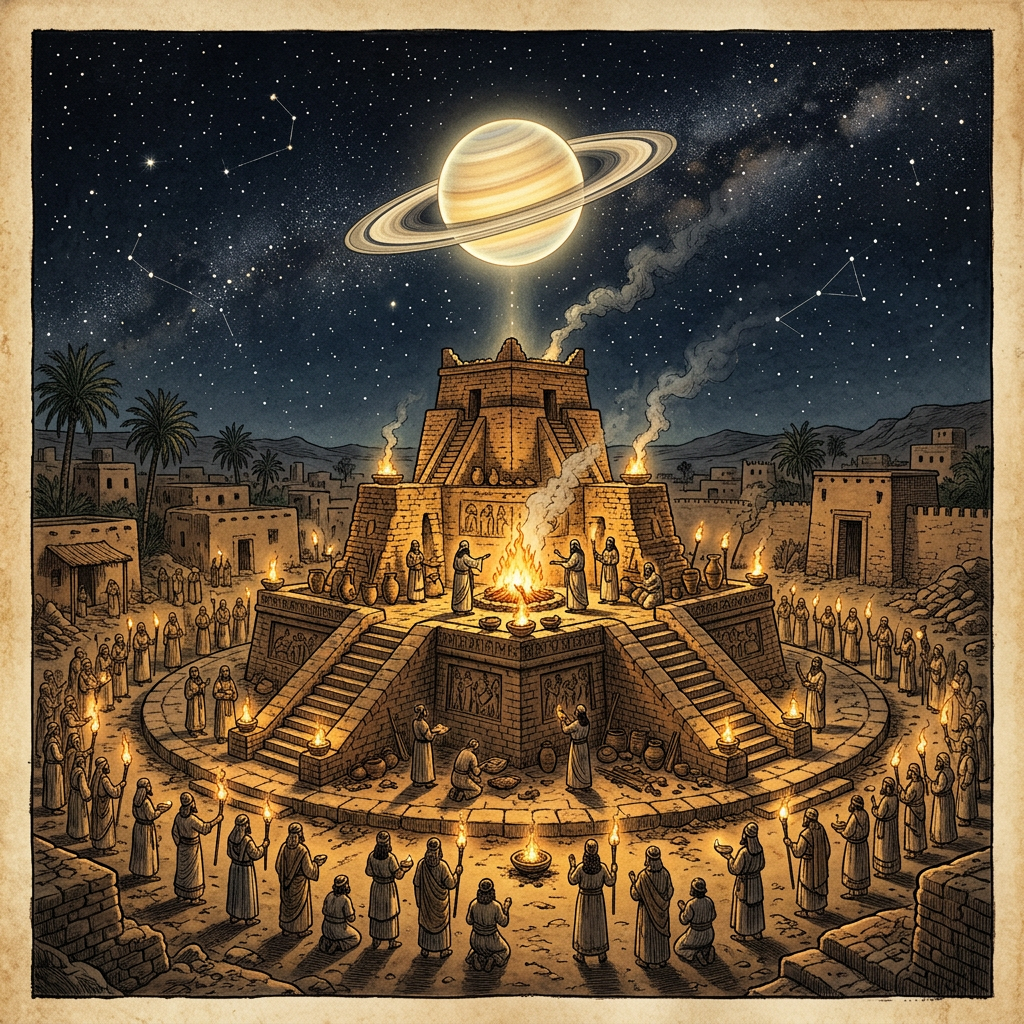
A combined study by archaeoastronomers and Vedic scholars has linked specific ritual descriptions in the early Yajurvedic texts to a rare celestial event: the Transit of Saturn across the star Antares in 2900 BCE. By using high-precision planetary motion simulators, the researchers were able to correlate the precise duration and sequence of the 'Soma-Saturn' ritual layers with the observational window available to observers in the Saraswati-Drishadvati basin.
This research provides critical evidence for the antiquity of systematic astronomical observation in the Indian subcontinent. The study highlights how ritual architectures, including specific fire-altar geometries, were designed to align with the meridian transit of outer planets, allowing ancient astronomers to calibrate their lunar calendars with extreme accuracy. This finding significantly shifts the timeline for the development of mathematical astronomy in early South Asian civilizations.