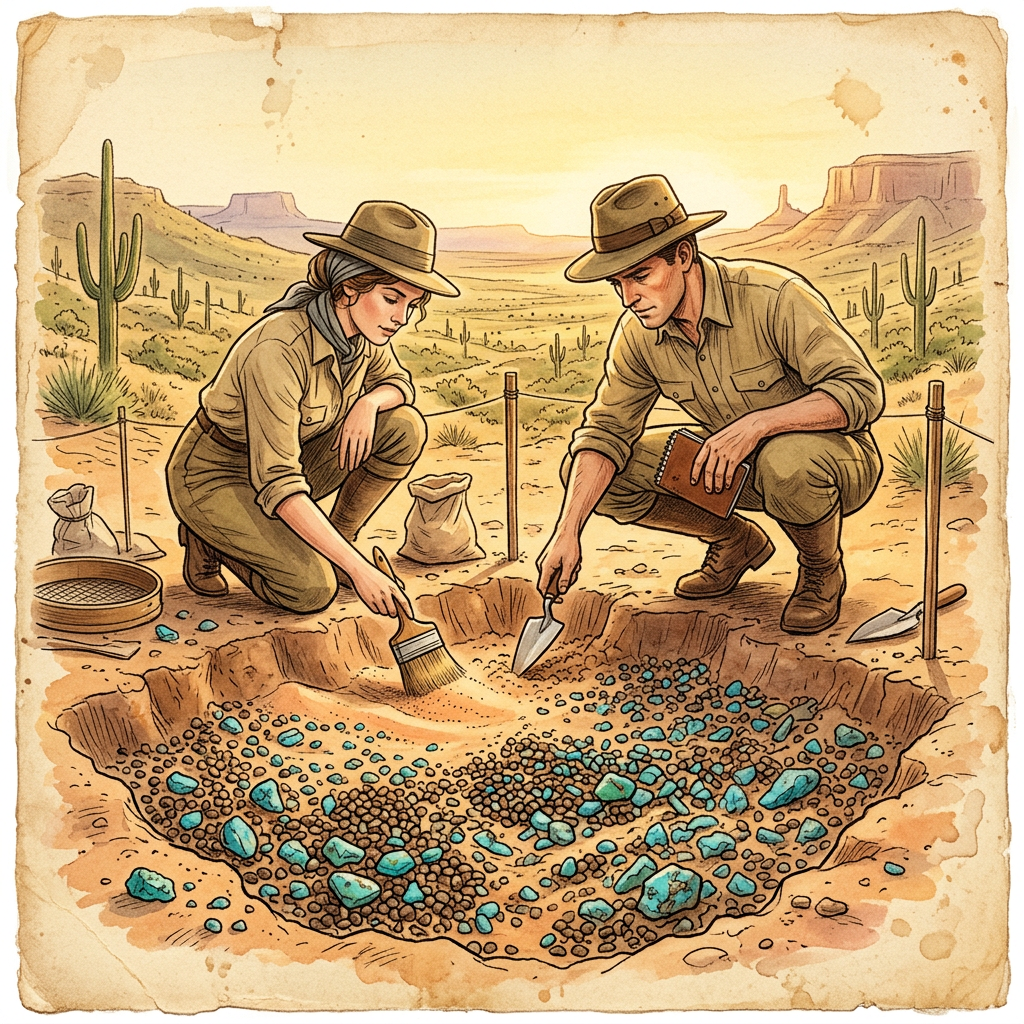
Recent excavations in the Gila River Valley of Arizona have uncovered a series of ritual pits containing millions of charred saguaro cactus seeds and fragments of turquoise-inlaid ceramic jars. These features date back to approximately 500 AD and are believed to be the earliest archaeological evidence of the Nawait, or saguaro wine ceremony. This festival is a cornerstone of O'odham cultural heritage, performed to bring the summer rains to the desert.
The pits were organized in a circular pattern around a central dance floor, indicating a highly structured ceremonial space. Unlike domestic trash heaps, these pits were lined with fine river sand and contained votive arrowheads made of rare obsidian. The discovery emphasizes the long-term continuity of indigenous desert survival strategies and the sacred nature of the saguaro cactus as a provider for both physical and spiritual needs.