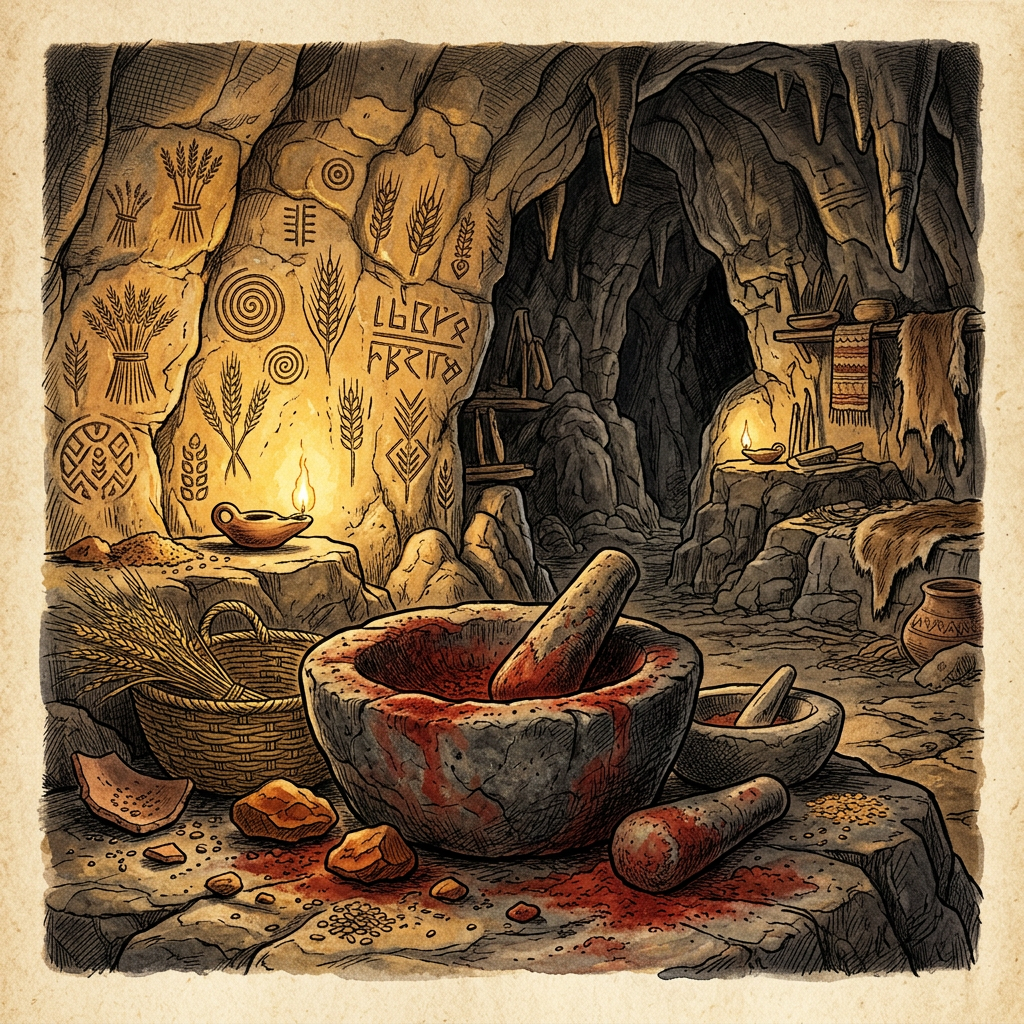
In the high-altitude peaks of the Atlas Mountains in Morocco, archaeologists have discovered a hidden cavern containing a collection of massive stone mortars stained with bright red cinnabar. These tools were used for the ritual grinding of the first harvest of barley, a practice that forms the mythological foundation of the ancient Berber festival of Tislit n Unzar. The find dates to the mid-first millennium BC, providing a rare glimpse into prehistoric North African agricultural rites.
The cave walls are decorated with engraved symbols of rain and wheat stalks, suggesting the site was a permanent sanctuary for seasonal grain-blessing rituals. Researchers also found caches of polished walnut shells and animal bones, indicating that the grinding was accompanied by communal feasting. This discovery underscores the deep antiquity of Berber oral traditions that still celebrate the relationship between mountain rainfall and the survival of the community.