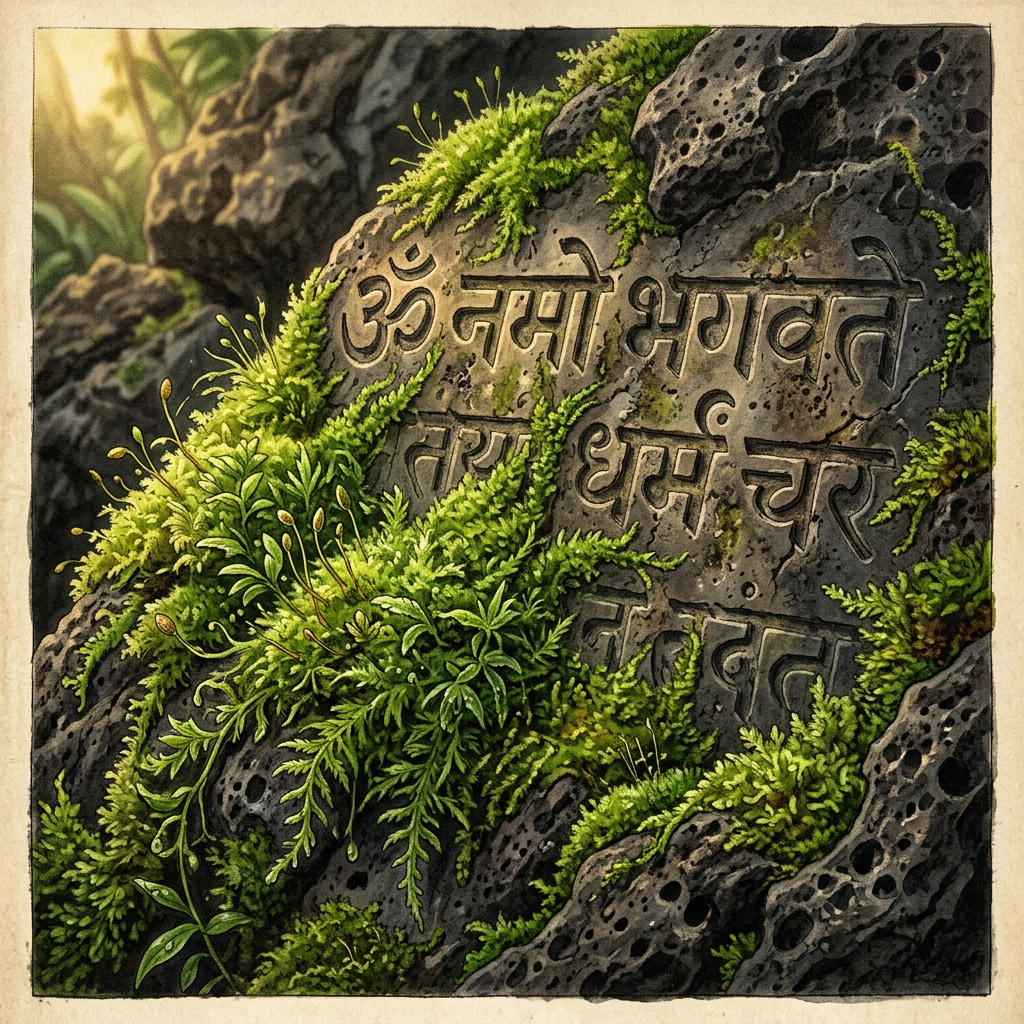
A collaborative project between paleographers and geologists has used AI to decode 8th-century fragments written in the Sharada script, revealing a sophisticated ancient system for geothermal mapping. The manuscripts, recovered from a high-altitude cache in the Zanskar Range, detail lost Sanskrit treatises on the classification of alpine bryophytes (mosses). According to the text, ancient scholars used the specific growth patterns and species distribution of these mosses to identify subterranean heat sources and thermal vents.
The findings indicate that ancient Indian scientists understood the role of mosses as 'bio-thermal indicators,' allowing them to map geothermal activity without modern instrumentation. By correlating the 1,200-year-old data with modern geological surveys of the same region, the research team found a remarkable accuracy in the ancient observations. This study emphasizes the high level of empirical science present in early medieval India, where natural observations were translated into rigorous taxonomical and geological systems for resource management and ritual site selection.