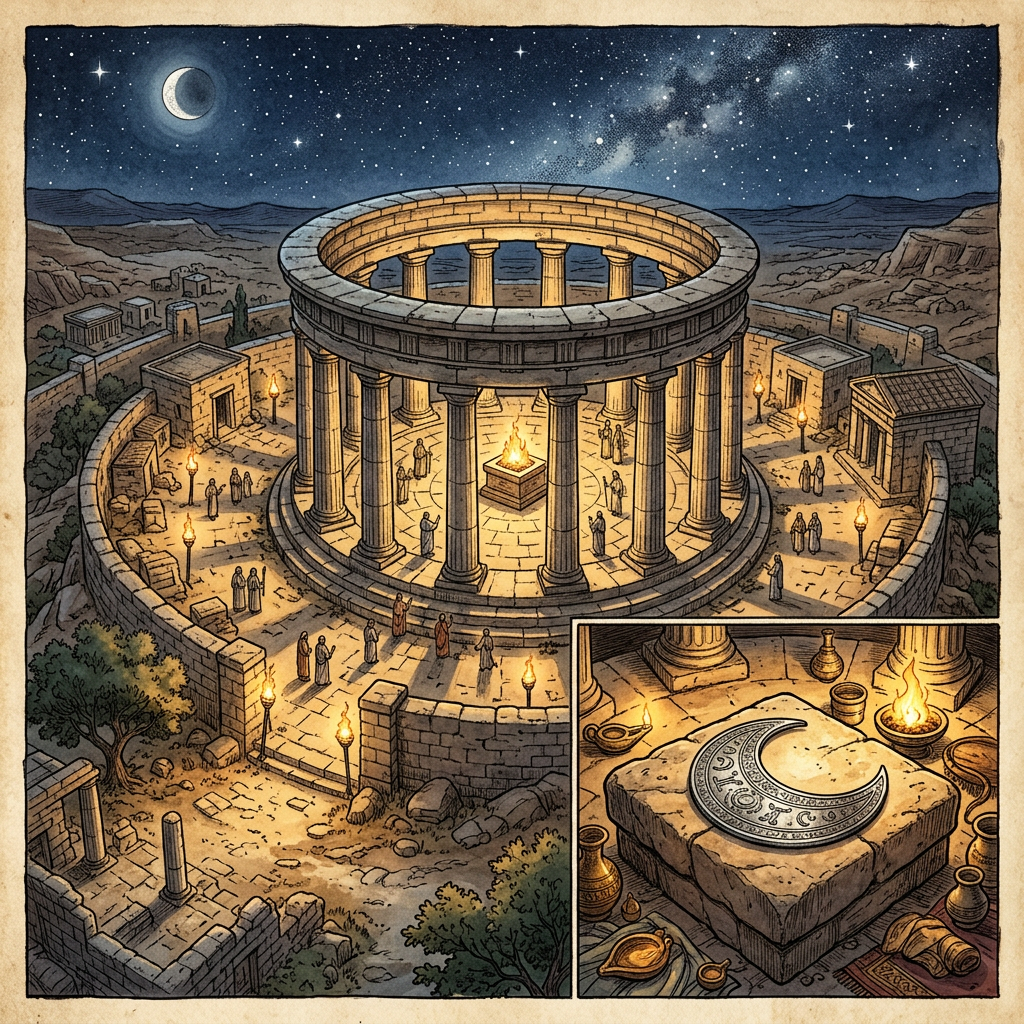
A team of archaeologists from the Ankara University Institute of Archaeology has announced the discovery of a remarkably well-preserved sanctuary dedicated to the Anatolian moon god, Men, in the ancient region of Phrygia. The site, dating back to the late 4th century BCE, features a unique circular layout that deviates from standard Hellenistic designs, suggesting a strong persistence of local indigenous architectural traditions during the transition to the Greek era.
Excavations revealed a central altar surrounded by twelve stone pillars, each corresponding to a lunar month. Most significantly, the team recovered a cache of thirteen silver lunar-discs and several crescent-shaped votive offerings tucked into a hidden sub-floor vault. These artifacts provide rare physical evidence of the specific ritual offerings made to the deity, often associated with healing, fertility, and protection of the deceased.