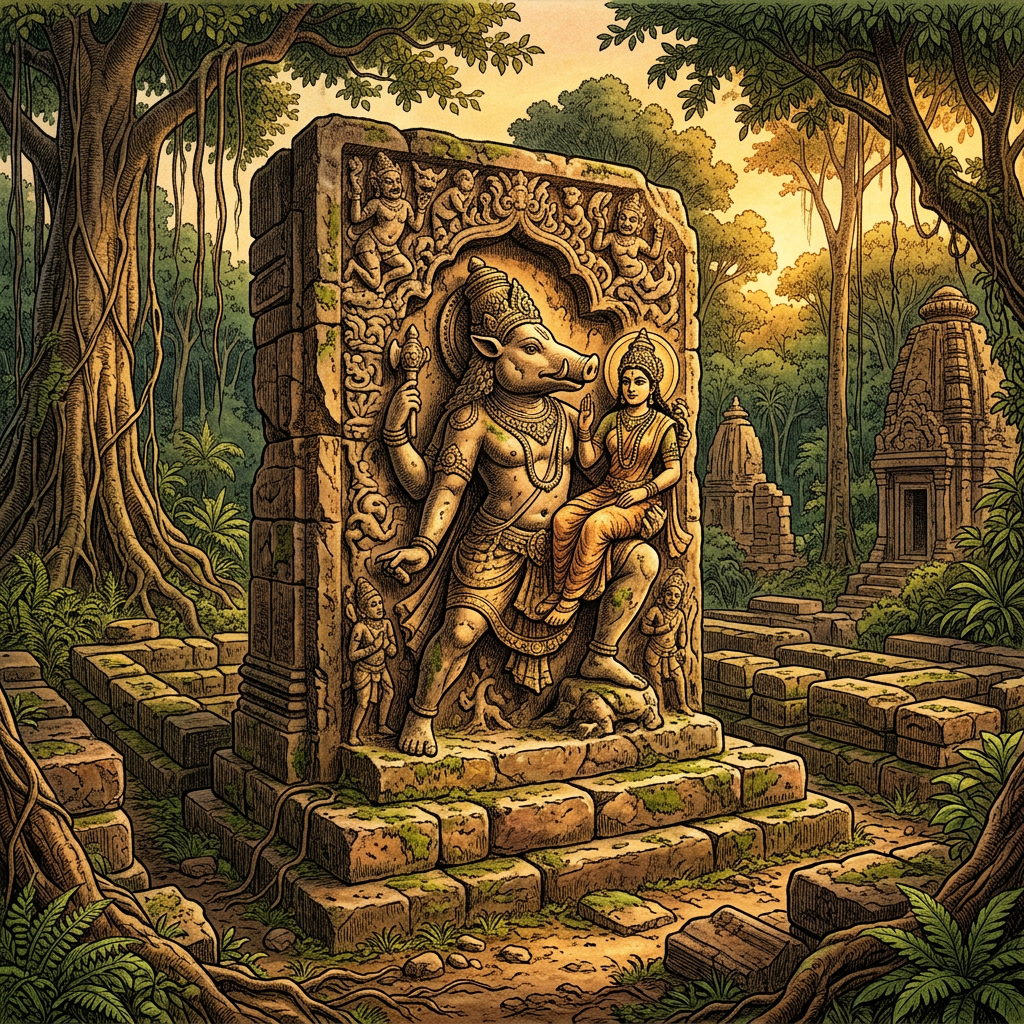
In a major breakthrough for early medieval Indian history, archaeologists have unearthed the foundations of a 6th-century temple belonging to the lesser-known Parivrajaka Dynasty. Located in the Panna district of Madhya Pradesh, the site features a distinct architectural style that serves as a bridge between the late Gupta and early Pratihara periods. The temple is dedicated to Lord Vishnu, evidenced by a massive, intricately carved relief of Varaha (the boar incarnation) lifting the Earth.
The discovery is particularly significant because the Parivrajaka rulers are mostly known from copper-plate grants rather than structural remains. The temple’s stone blocks were joined using a sophisticated lead-clamping technique, which has allowed the foundation to remain stable despite seismic activity over the centuries. A series of stone panels depicting the Dashavatara was also found scattered around the sanctum, suggesting a high degree of artistic refinement in this regional kingdom.